Iceland Travel Guides
Ásmundarsafn: Sculpture, Architecture, and a Museum Built from an Artist's Mind
A fuller private guide to Ásmundarsafn, with its sculptor-designed house and studio, white dome and garden, links to Laugardalur, and the reason this Reykjavík museum is as much architecture as exhibition.
GlaciGo Iceland / May 2026 / 9 min read
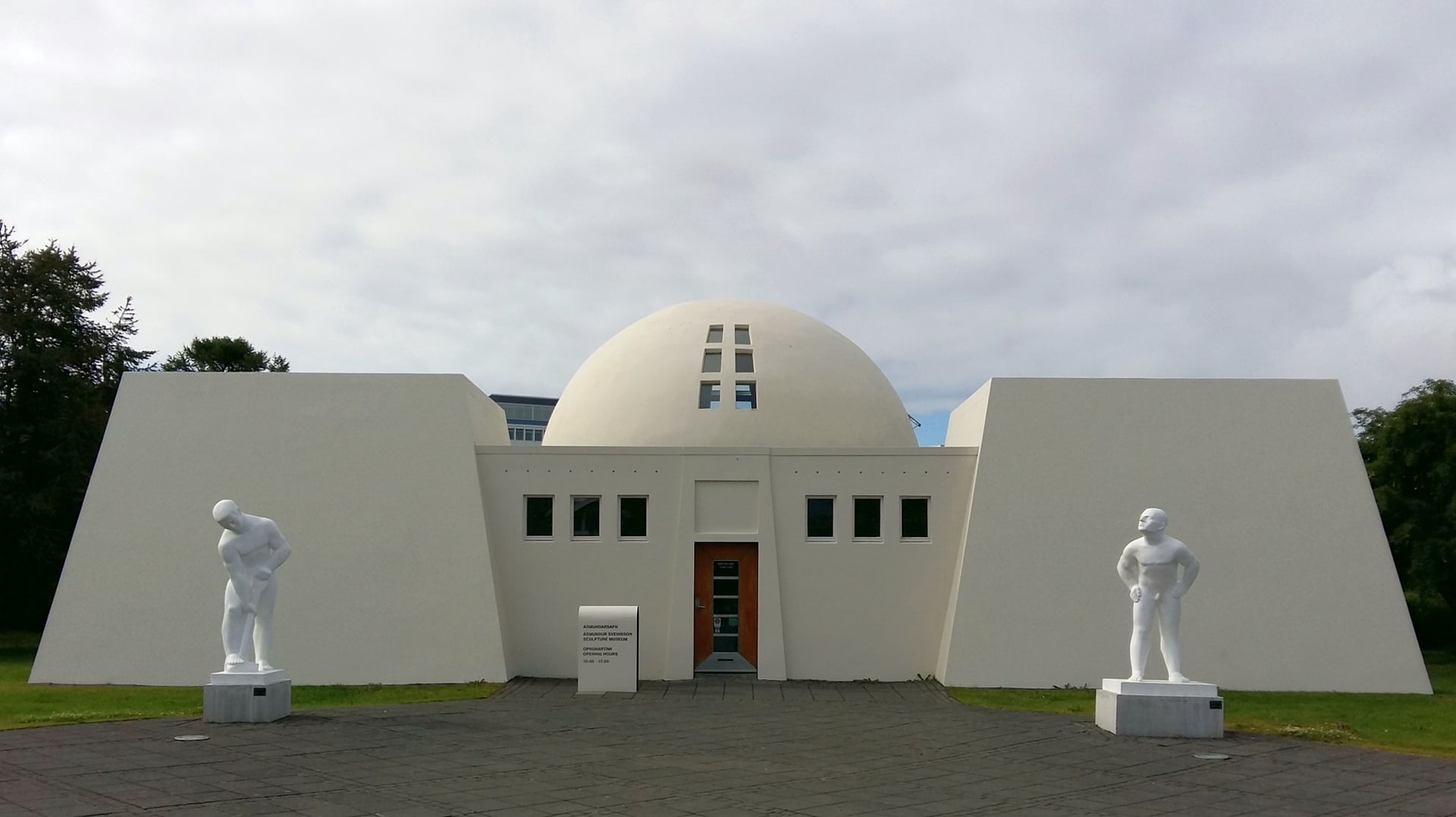
Ásmundarsafn is one of the rare Reykjavík museums where the building itself is not simply a container for art but one of the main artworks in the experience. That becomes obvious almost immediately. Before you have taken in the sculpture garden or read anything about Ásmundur Sveinsson, the white domes, angular forms, and strangely composed volumes already tell you that this will not be a neutral gallery visit. The place has the feeling of a sculptor thinking in architecture. A good article about Ásmundarsafn should begin there, because what makes it memorable is not only the work on display. It is the union of house, studio, garden, and imagination.
Visit Reykjavík introduces Ásmundarsafn as the beautiful building that the sculptor Ásmundur Sveinsson designed, worked in, and lived in, now part of Reykjavík Art Museum. That summary is short, but it holds the essential truth. You are entering a space where the artist's life, workplace, and formal ideas were allowed to become physical all around him. This gives the museum a different intimacy from institutions built later to conserve a finished legacy. Ásmundarsafn feels shaped from the inside outward.
The official history from Reykjavík Art Museum deepens that impression dramatically. Ásmundarsafn is dedicated to the works of Ásmundur Sveinsson, one of the pioneers of sculpture in Iceland, and was officially opened in 1983 after he bequeathed both a large collection of his work and the building itself to the City of Reykjavík. The museum now also hosts exhibitions by other artists, often in dialogue with Ásmundur's art. That matters because the site is not frozen as a shrine. It continues to act as a living art space, while still allowing the sculptor's own presence to organize everything.
The house was built in phases between 1942 and 1959, and this piecemeal growth is part of its character. The museum history explains that Ásmundur mostly designed it himself, with assistance from architects such as Einar Sveinsson and later Manfreð Vilhjálmsson. The forms draw inspiration from Mediterranean vernacular architecture, Middle Eastern domes, and Egyptian pyramids. That might sound eclectic in a way that risks becoming arbitrary, but in the building it reads differently. Ásmundur was not collecting exotic references for effect. He was searching for an Icelandic architectural language suitable for a rugged, treeless country, and he found that answer through strong geometric forms, thick walls, sculptural mass, and carefully handled light.
This is one of the most fascinating things about Ásmundarsafn for tourists who enjoy architecture as much as art. The building is not elegant in the smooth international style that many capital-city museums adopt. It is more idiosyncratic and tactile than that. The official history even describes the exterior as smooth white-painted concrete standing out against blue skies and snowstorms, with small window openings more concerned with admitting light through seasonal variation than opening the interior to outward views. That is an unusually Icelandic architectural instinct. The building does not try to disappear into the landscape. It stands its ground against it.
Ásmundarsafn's three-part development helps a visitor read the sculptor's own artistic evolution. First came the Dome, a square residential structure with a hemispherical roof. Then came the 'Pyramids,' the narrow wing with trapezoidal forms facing the street. Later came the Shed, the U-shaped workshop and gallery behind the earlier structures, lighter and more open in feeling. Reykjavík Art Museum's history page makes an elegant connection between these structural changes and shifts in Ásmundur's sculpture: from heavier, more massive work toward lighter, more transparent forms in wood and metal that played with surrounding space. In other words, the architecture and the art develop together.
That relationship is what gives Ásmundarsafn so much depth. Many artist homes preserve furniture, habits, and atmosphere. This place preserves a way of thinking. The building's massing, vaults, columns, and light all suggest a sculptor wrestling with volume and later with space itself. The museum quotes Ásmundur describing how iron allowed him to 'capture the space that the material can absorb.' Once you know that, the whole site becomes easier to read. It is not only a museum of finished objects. It is a record of a changing sculptural mind.
The garden is another major reason the place works so well. Visit Reykjavík points out that the white dome is surrounded by Sveinsson's sculptures, from earlier massive figures to later lighter abstract compositions. The official museum history adds that many enlargements and casts stand in the garden, some placed there by the artist himself. This matters enormously, because sculpture in Iceland often feels strongest outdoors. Light, weather, and distance become part of the work. At Ásmundarsafn, the garden lets visitors experience that directly. The sculptures are not only seen; they are exposed, tested, and reinterpreted by Reykjavík's sky.
For tourists, this outdoor dimension makes the museum especially appealing in combination with a walk through the broader Laugardalur area. Visit Reykjavík explicitly notes how well Ásmundarsafn fits with nearby attractions such as the thermal pool, botanic garden, and Reykjavík Park and Zoo. This is useful itinerary advice, but it also reflects the museum's tone. Ásmundarsafn is not a forbidding high-culture institution requiring a whole day of solemnity. It can be part of a slower urban day that mixes art, green space, leisure, and neighborhood atmosphere. That suits both the museum and the city.
The location in Sigtún matters historically too. The museum history notes that the area was once a barren, gravelly rise on the outskirts of Reykjavík when the city allocated the plot to Ásmundur. At the time there was still a farmhouse with livestock and hay cultivation in Laugardalur. This detail is beautiful because it reminds us that both the museum and the city around it were still being imagined. Ásmundarsafn therefore stands not only as a work of art but as a small act of settlement inside a growing twentieth-century Reykjavík.
Inside, the building offers a very different mood from outside. The museum history describes the indoor ambience as shaped by the dissimilar parts of the building, from the narrow staircase rising into the dome to the marble floor in the later sections reflecting daylight back onto three-dimensional works. The result is intimate rather than grand. Even when the architectural references stretch toward Rome, Egypt, or the Mediterranean, the scale remains human and slightly strange. This is one reason visitors often remember the feeling of moving through Ásmundarsafn as much as any single sculpture.
Asmundarsafn is more than a sculpture museum listing. Some visitors are interested in Reykjavik Art Museum, others in artist studios, sculpture gardens, or unusual architecture. The fuller answer is that the building, the sculptures, the garden, and Asmundur Sveinsson's architectural imagination form one coherent work. The museum is not just a container for art; it is part of the art's meaning.
What stays with many visitors after Ásmundarsafn is often a heightened sense of form. Reykjavík outside may feel flatter, more practical, more ordinary for a few minutes, because inside the museum one has been moving through a world where walls, domes, ribs, volumes, and figures all seemed to think together. Ásmundarsafn lingers because it shows what can happen when an artist is allowed to build not only objects, but the space in which those objects will go on living.