Iceland Travel Guides
Berserkjahraun: Saga Road and Sn?fellsnes Lava
A fuller private guide to Berserkjahraun Lava Field, with its 4,000-year-old volcanic origin, Eyrbyggja Saga road legend, moss-covered lava textures, and drive-through role on Snæfellsnes.
GlaciGo Iceland / May 2026 / 10 min read
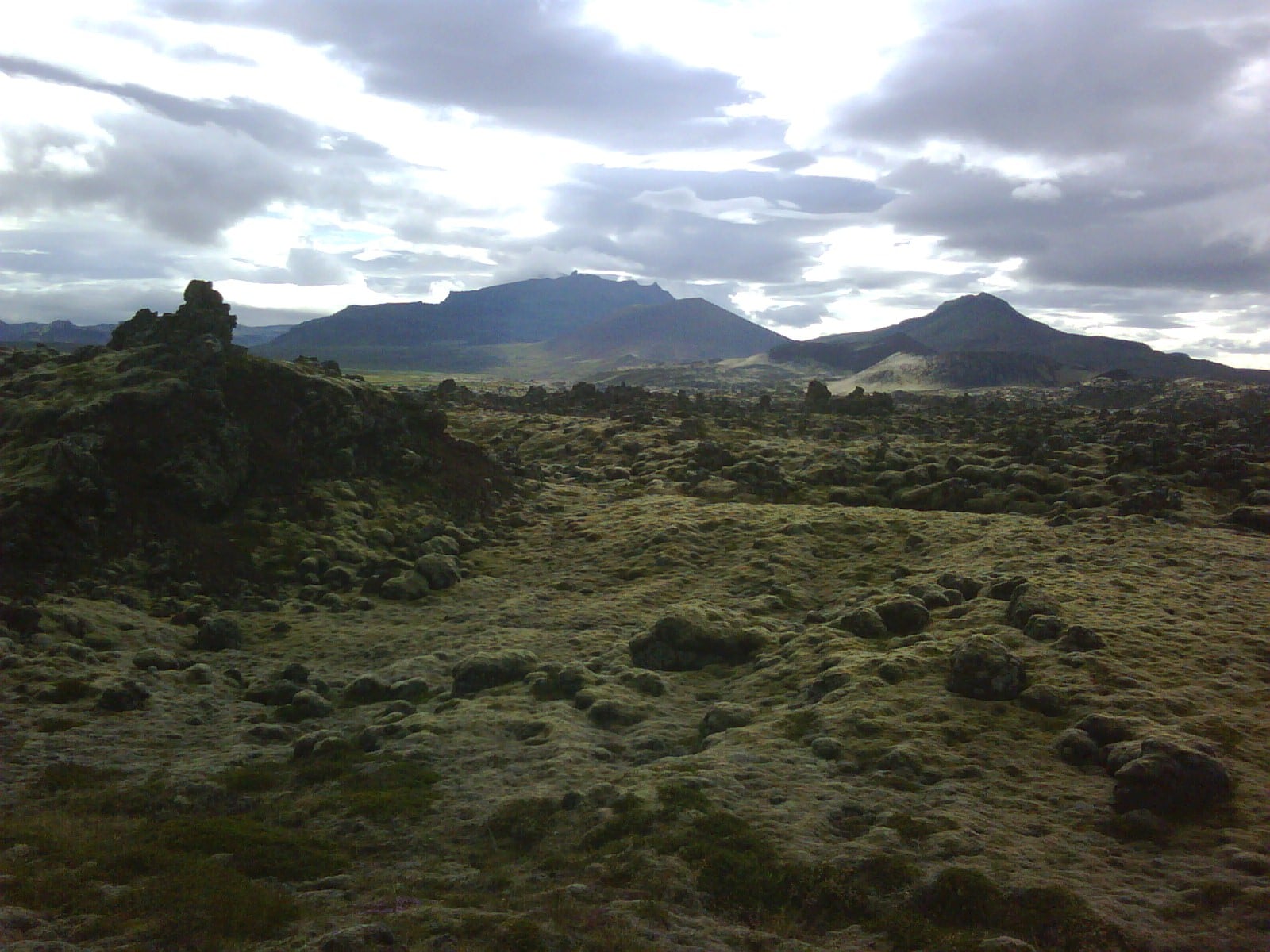
Berserkjahraun Lava Field is one of those Iceland places where the landscape and the story arrive together so completely that it is hard to separate them afterward. Even before you know the saga, the lava already feels storied. Moss-covered rock spreads outward in dark, irregular ridges, the road threads through it as if negotiating with an old wound in the land, and the whole field carries a mood that is rougher and more narrative than a simple geological stop. Once you learn why it is called Berserkjahraun, the place becomes even harder to forget.
West Iceland's official description is wonderfully direct. Berserkjahraun is a 4,000-year-old lava field on the Snæfellsnes peninsula, covering the western part of Helgafell between Stykkishólmur and Grundarfjörður. It was created after four scoria craters erupted in short intervals around 4,000 years ago, sending lava from the slopes of Bjarnarhafnarfjall out toward the sea at Hraunsfjörður and Hraunsvík. That gives the basic geological frame, and it is already enough to make the place interesting. This is not a decorative patch of old volcanic rock beside the road. It is the hardened result of a serious eruptive episode tied to the broader Ljósufjöll volcanic system.
But Berserkjahraun is not remembered only because of its age or form. West Iceland also preserves the saga story that gave the lava field its name, drawn from Eyrbyggja Saga. According to that tradition, a farmer brought two berserkers from Sweden to Snæfellsnes and later gave them to his brother Víga-Styr, who lived on the other side of the lava field. One of the berserkers fell in love with Víga-Styr's daughter and asked to marry her. Víga-Styr promised the marriage if the two men could clear a path through the lava to connect the farms. They accomplished what should have been impossible, and he then had them killed and buried near the path rather than honoring the promise.
That is a brutal story, even by saga standards, and it changes the emotional temperature of the field immediately. You stop seeing only lava. You begin to see labor, deceit, and memory pressed into the route that cuts through it. Berserkjahraun is one of the clearest places in Iceland where landscape, road, and saga legend feel inseparable.
The road through the field is part of the attraction for exactly that reason. This is not a stop where you walk from a parking lot to a single viewpoint and leave. Berserkjahraun is often encountered by moving through it. The lava closes in, the forms become lumped, jagged, and moss-softened at once, and the drive starts to feel less like transit and more like passage. That distinction matters. Some lava fields are best admired from above or from the margins. Berserkjahraun works by surrounding you. The experience is not just visual. It is spatial and narrative.
That drive-through quality gives the place unusual route value on Snæfellsnes. It pairs naturally with Stykkishólmur, Grundarfjörður, Kirkjufell, Bjarnarhöfn, and the wider peninsula, but it changes the rhythm of the day in a different way from those stops. Towns give you services and human scale. Mountains and beaches give you viewpoints and edges. Berserkjahraun gives you texture. It fills the road with memory and volcanic irregularity. Good itineraries need that kind of middle chapter: a place that does not simply interrupt the route but becomes the route for a while.
Geologically, Berserkjahraun also rewards people who like lava not only as a black surface but as a record of movement. West Iceland's note that the lava ran out to the sea is more important than it may seem at first. It tells you that the field should be read as flow, not just as a static body of rock. Even now, you can sense the directional logic in the way the field spreads and breaks across the land. The shapes are no longer molten, of course, but they still remember motion. Moss softens the edges, yet the field keeps its old force underneath.
This makes Berserkjahraun especially different from more graphically clean stops like Gerðuberg. At Gerðuberg, basalt becomes order. At Berserkjahraun, lava becomes obstacle, density, and difficult beauty. That contrast is good for a West Iceland collection because it shows how many different visual languages Icelandic volcanism can speak. One landscape lines itself into columns. Another hardens into a maze. Berserkjahraun belongs to the latter world.
The saga layer intensifies that maze-like feeling. Once you know the story of the path the berserkers supposedly cleared, the lava stops feeling merely scenic. It starts feeling charged. You imagine the effort of moving tools and bodies through this field, the absurdity of the promise, the physical difficulty of forcing a route through lava, and the coldness of betraying that effort afterward. Whether a visitor approaches the saga as literature, local memory, or partial landscape myth does not really matter. The point is that Berserkjahraun is no longer mute once the tale is known.
Photographically, the field works best when you let that roughness remain rough. Moss, lava humps, road lines, and low volcanic forms are usually more expressive than trying to force a single grand composition. If the weather is soft, the field can feel moody and almost prehistoric. In sharper light, the textures and green-black contrasts become more graphic. Including the road can often strengthen the image because it communicates the essential truth of the place: Berserkjahraun is not just seen, it is crossed.
It is also one of those sites that improves if you give it a little more time than the guidebook minimum. A quick drive through can be satisfying, but a slower pause lets the field begin to differentiate itself. You notice how the moss settles into hollows, how the rocks rise and slump, how the road's presence changes your sense of scale, and how the surrounding mountains and coast make the lava feel less isolated than it first appears. The stop grows richer the moment you stop treating it as background scenery between bigger landmarks.
For travelers who care about literature, Berserkjahraun offers a different kind of Icelandic reading experience from places associated with Snorri or with church history. This is not a tidy cultural center or a carefully framed pool beside a village. It is saga memory left out in the open, in the middle of a difficult field of rock. That gives it a rawness that is particularly satisfying. It feels less curated and more embedded. The story remains in the road and in the name itself.
From an itinerary point of view, Berserkjahraun is also useful because it adds complexity to the north side of Snæfellsnes. Many travelers naturally lean toward the coast, the mountains, and the better-known icons. Berserkjahraun reminds them that some of the peninsula's most memorable experiences happen in the volcanic middle, where roads, farms, and old eruptions create a more layered sense of place. It helps turn a simple scenic drive into a more narrative route.
Berserkjahraun is too easily reduced to a lava field with an unusual name. The stronger explanation is that it is one of West Iceland's most memorable drive-through volcanic landscapes, shaped both by an eruption around 4,000 years ago and by one of the most vivid road legends preserved in the sagas. That combination is rare, and it helps travelers understand why this stop belongs in a thoughtful Sn?fellsnes route.
What stays with many visitors after Berserkjahraun is not a single perfect image, but a feeling of having passed through a place that still holds friction. The moss is soft, the story is not, and the lava itself still looks like something that resisted easy crossing. Berserkjahraun lingers because it makes West Iceland feel older, harsher, and more storied than the postcard version. It is one of those places where the road itself becomes part of the tale.