Iceland Travel Guides
Blue Lagoon: Geothermal Design, Silica Water, and Reykjanes Context
A fuller private guide to Blue Lagoon, with its geothermal-industrial origin, silica-rich water, wellness ritual, logistics, and why the experience works when understood on its own terms.
GlaciGo Iceland / May 2026 / 11 min read
Blue Lagoon is one of those places in Iceland that people often think they already understand before they arrive. They have seen the milky-blue water in photographs, heard arguments about whether it is too famous, too polished, too expensive, too artificial, or too iconic to miss, and usually come carrying a ready-made opinion. The trouble is that most of those opinions flatten the place. Blue Lagoon is not best understood as either a pure natural wonder or a theme-park spa that happens to sit in lava. It is more interesting than either of those caricatures. It is a hybrid Icelandic landscape: geothermal, industrial in origin, scientifically studied, highly designed, and emotionally very effective when approached with the right expectations.
The official Blue Lagoon story begins with a fact that should shape any honest article about it. According to Blue Lagoon Iceland's own history and water pages, the lagoon formed in the lava field beside the Svartsengi Geothermal Resource Park in the late 1970s as an unintended byproduct of geothermal energy production. In the early 1980s, local residents started bathing in the water and noticed that it left them feeling restored, and in some cases soothed skin conditions. Scientific research followed, and Blue Lagoon as a company was founded in 1992 to unlock the benefits of geothermal seawater. That sequence matters. Blue Lagoon did not begin as a luxury fantasy dropped onto volcanic ground. It began as an industrial accident that people slowly learned to read as a resource, then a healing environment, then a destination.
Blue Lagoon's own water material explains what makes the lagoon distinct. Deep underground, ocean water and freshwater converge under heat and pressure to form what the company calls geothermal seawater. When that water is drawn up through geothermal extraction wells, it arrives enriched with silica, algae, and minerals. Once it cools at the surface, the freed silica becomes the iconic white mud that visitors recognize immediately. This is one of the reasons the lagoon resists easy categorization. It is not an ordinary hot spring, not an ordinary pool, and not simply waste water in the casual dismissive sense people sometimes repeat. It is a managed bathing environment built around a very particular geothermal fluid with unusual physical and biological properties.
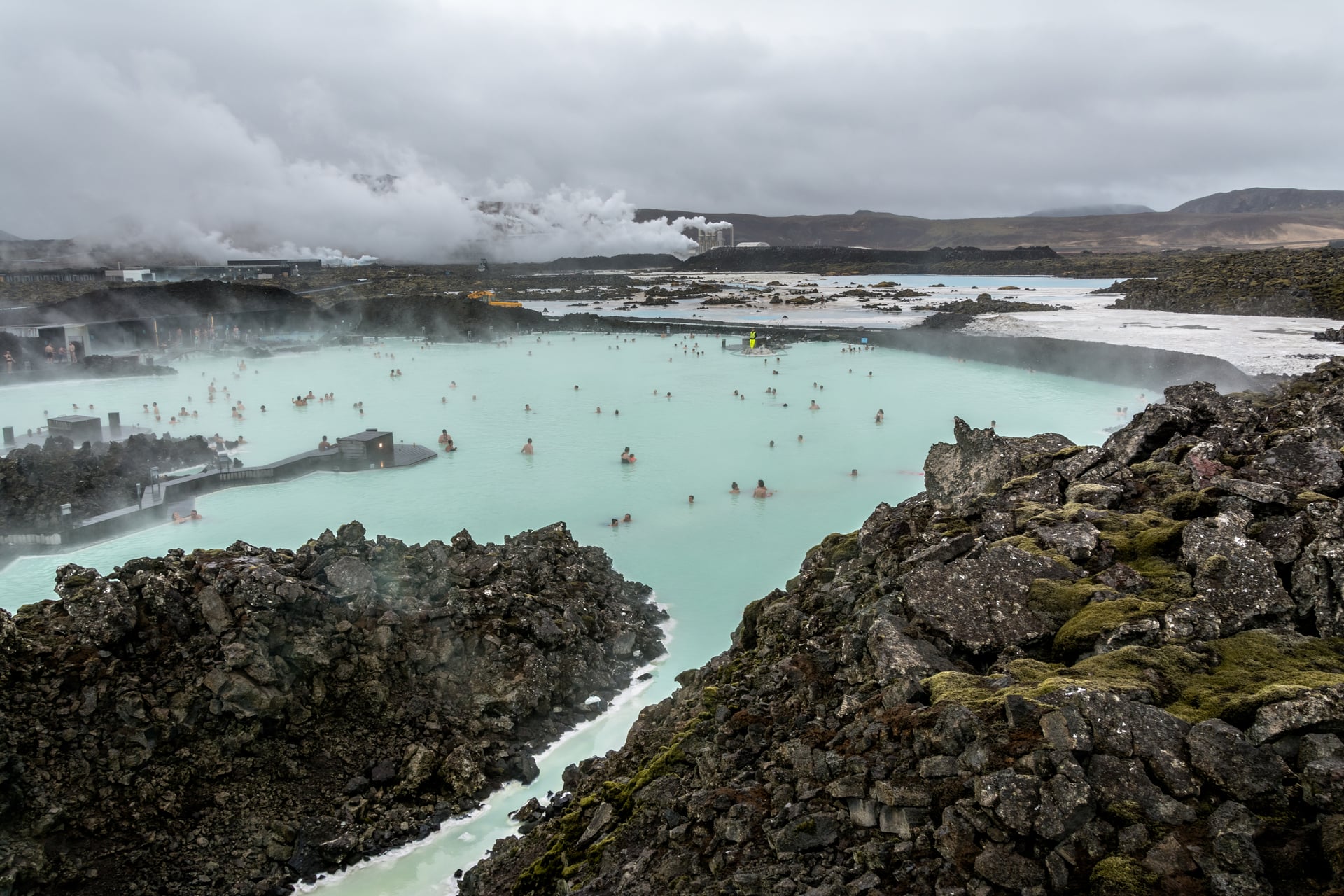
That specificity also explains the color, which remains one of the strongest emotional hooks of the visit. The pale blue is not a trick of dye or a marketing effect added afterward. Blue Lagoon's official fact sheet and water pages tie the visual identity of the lagoon to silica and the way light interacts with the mineral-rich water. In person, the effect can still surprise even skeptical visitors. Against black lava and white steam, the water looks less like a pool and more like a substance invented for a myth. This is where Blue Lagoon earns some of its fame honestly. The landscape may be curated, but the visual experience is still genuinely strange.
A good article should also acknowledge the common criticism that Blue Lagoon is too manufactured. In one sense, that criticism is true. The site has changing rooms, restaurants, bars, architecture, walkways, treatments, hotel experiences, and a carefully designed sequence of guest movement. But that is not really a scandal. It is the point. Blue Lagoon is not pretending to be a wild backcountry spring. It is a crafted wellbeing destination built around a volcanic resource. The more useful question is not whether it is designed, because of course it is, but whether that design helps translate an unusual geothermal environment into a satisfying human experience. For many travelers, the answer is yes.
Blue Lagoon's own materials help clarify the range of that experience. The company positions the lagoon not just as one pool but as a broader destination that includes the main bathing lagoon, the Retreat, dining, skincare science, and a philosophy of wellbeing shaped by geothermal seawater. The Blue Lagoon Ritual, described on the official ritual page, revolves around silica, algae, and minerals in a sequence of applications meant to connect the guest more deliberately with the bioactive elements of the water. Even if a traveler does not choose the most luxurious version of the experience, understanding that framework helps explain why Blue Lagoon feels different from a municipal pool or even from other Icelandic lagoons. The site has spent decades turning geology into a branded language of care.
That brand language would be much less convincing if the science and operations around the water felt vague. Instead, Blue Lagoon has invested heavily in making the system legible. Its fact sheet says the water is about 30 percent freshwater and 60 percent seawater, naturally renewed on roughly a two-day cycle, and maintained at around 38 degrees Celsius. A more recent official water-quality article dated 15 April 2026 states that the water refreshes approximately every 40 hours, is continuously monitored, and supports conditions in which foreign bacteria does not thrive easily. Whether one reads those claims primarily through hospitality, wellness, or hydrogeology, the effect is the same: Blue Lagoon is most persuasive when it explains itself rather than asking to be accepted as magic.
This is also where the site becomes culturally interesting. Iceland has a long bathing tradition, but Blue Lagoon does not simply reproduce the neighborhood-pool culture that defines daily life in many towns. It reframes bathing through spectacle, design, and destination travel. That difference is why comparisons with Secret Lagoon or local pools can be misleading if they become moral rather than descriptive. Secret Lagoon offers intimacy and historical simplicity. Municipal pools offer everyday Iceland. Blue Lagoon offers a globalized, high-design interpretation of geothermal bathing rooted in the specific conditions of Svartsengi. Each has its own logic. Judging Blue Lagoon as though it ought to behave like the others misses what it is actually trying to do.
For private travelers, one of Blue Lagoon's strongest advantages is logistical rather than philosophical. The official transport and location information place it about 20 minutes from Keflavik Airport and roughly 50 minutes from Reykjavik, which makes it unusually easy to integrate into arrival-day and departure-day planning. That convenience is part of its power. Blue Lagoon often becomes a threshold experience: the first place where visitors physically understand that Iceland runs on geothermal energy, lava fields, and weather, or the last place where they sit in warm mineral water before returning to ordinary airport time. Few famous attractions in Iceland fit so naturally into the edges of a trip.
Blue Lagoon also sits within the geologically active Reykjanes region, and recent years have made that impossible to ignore. The destination is professionally managed and publishes current operating information, but access can change when authorities and operators judge it necessary. A careful private itinerary should therefore confirm same-day official guidance before treating the stop as fixed. That tone is neither alarmist nor naive. It simply matches the reality of a high-design spa operating in an active volcanic district.
Photographically, Blue Lagoon is oddly difficult in exactly the way overfamiliar places often are. Everyone has already seen the headline image. The trick is to find what the place actually feels like rather than simply re-creating what it already looks like online. Sometimes that means focusing on steam swallowing the edges of the lagoon. Sometimes it means black lava appearing almost calligraphic against blue water. Sometimes it means the whiteness of silica on skin, or the tension between futuristic architecture and rough volcanic ground. Blue Lagoon rewards photographers who are willing to look past the postcard version and treat the site as a study in texture and atmosphere.
The sustainability story is another part of the place that deserves careful, non-naive attention. Blue Lagoon Iceland emphasizes that the geothermal energy harnessed at Svartsengi provides all of the company's electricity, heating, and hot water, and frames its operations through circular use of geothermal streams. This should not be repeated as empty virtue language, but it does matter. Blue Lagoon exists because Iceland has developed a distinctive relationship with geothermal energy, where resource use, tourism, research, and aesthetics sometimes overlap rather than stay neatly separated. The lagoon is a strong example of that overlap, both inspiring and a little uncanny in the way many Icelandic infrastructures can be.
There is also a more emotional reason people remember Blue Lagoon, even when they arrive skeptical. The site creates contrast very efficiently. You step from cool air into warm opaque water. You look from pale mineral surfaces to black lava. You move from airport roads or city schedules into an environment that feels slowed, buoyant, and slightly unreal. That emotional shift is not accidental. Blue Lagoon has spent decades refining it. Some travelers will still prefer quieter, less iconic bathing experiences elsewhere in Iceland, and that preference is entirely fair. But it should not obscure the fact that Blue Lagoon is excellent at what it is trying to be.
From an itinerary perspective, Blue Lagoon works best when it is understood as a full stop rather than an obligation to rush through. People who treat it like a box to tick often leave unconvinced. People who give it proper time to soak, shower, breathe, and let the surreal color sink in tend to understand why it became famous. On a private route, that pacing is easier to control. You can pair it with nearby Reykjanes stops for geology before bathing, or place it after a long flight as a decompression ritual. Either way, context improves the experience.
Blue Lagoon is worth explaining in full because travelers arrive with unusually mixed questions: history, geology, water quality, logistics, comparisons, and whether the experience is worth the fame. A thin answer cannot hold all of that. The more honest answer is that Blue Lagoon is famous, commercial, beautiful, designed, geologically real, historically recent, and unmistakably Icelandic in its own peculiar way.
What stays with most visitors is not only the color of the water, but the realization that the place makes more sense once you stop asking whether it is natural or artificial and start seeing it as something Iceland is particularly good at making: a conversation between energy, design, science, and landscape. Blue Lagoon is not the whole story of Icelandic bathing culture, and it should never be mistaken for that. But as a story about how Iceland turns volcanic conditions into lived experience, it remains one of the clearest and most memorable chapters.