Iceland Travel Guides
Borgarfjörður Eystri: Puffins, Elves, and the Fullness of East Iceland
A fuller private guide to Borgarfjörður Eystri, with its puffin-rich harbor, elf stories, hiking culture, Bræðslan energy, and the reason this East Iceland village feels so complete.
GlaciGo Iceland / May 2026 / 11 min read
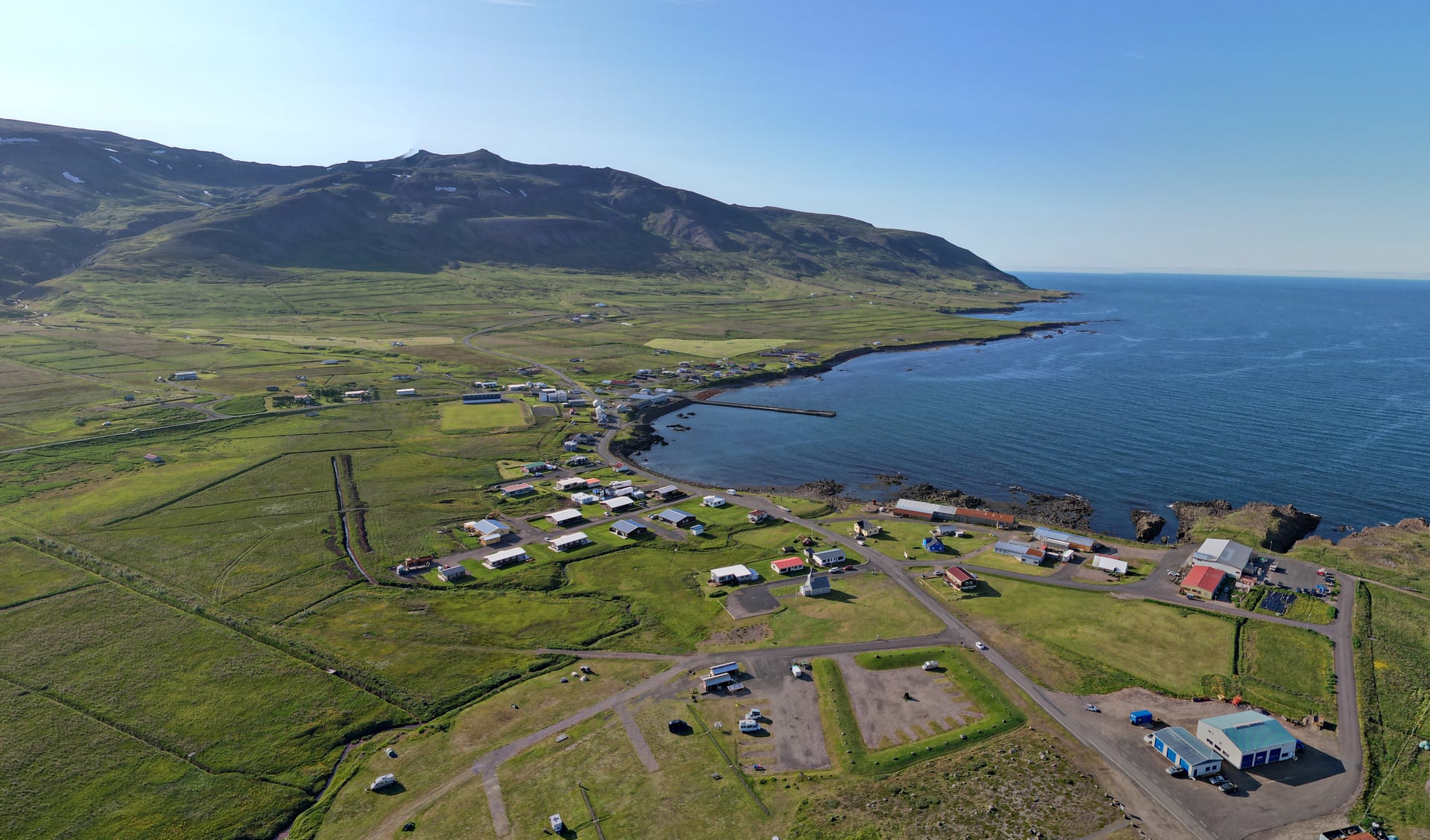
Borgarfjörður Eystri is one of those Icelandic places that rewards people who are willing to go a little out of their way and then slow down once they arrive. It does not sit conveniently on the Ring Road. You turn away from the main traffic, drive over a mountain road, and enter a fjord where the pace immediately changes. That slight effort is part of the experience. Borgarfjörður Eystri feels less like a stop collected on a checklist and more like a place you have actually reached. The village of Bakkagerði, the harbor, the puffins, the hiking culture, the stories of hidden people, and the ring of mountains all work together to make it feel unusually complete.
Official East Iceland material says the 70-kilometer drive from Egilsstaðir to Borgarfjörður Eystri is an attraction in itself, with viewpoints over bays and mountains before the village finally appears. That is exactly right. The approach matters here. Many Icelandic destinations reveal their best qualities only after you park. Borgarfjörður Eystri starts earlier than that. The drive prepares you for a landscape that is less about one dramatic monument and more about a whole inhabited setting: sea, ridges, scree slopes, changing cloud, and a settlement that looks small but carries a strong identity.
Visit Austurland and the local Borgarfjörður site both emphasize the scale of the community. Depending on the source and season, the village is described as having around 100 to 130 residents. That small population is not just a statistic. It shapes the tone of the place. Borgarfjörður Eystri feels like a real fishing village that happens to welcome visitors, not a tourism set dressed to resemble one. The local site explicitly says the area offers the chance to experience a genuine Icelandic fishing village with a small-boat fishery, different from the larger-scale fisheries that dominate elsewhere. That distinction matters. The harbor here still belongs to daily life, not only to photographs.
The birdlife is the best-known draw, and with good reason. Hafnarhólmi, the islet by the harbor, is described by Visit Austurland as perhaps the most accessible Atlantic puffin colony in Iceland, with nesting season running from mid-April to the beginning of August. The local tourism leaflet is even more direct: it says bird enthusiasts can observe puffins from just a couple of meters away from the platforms and shelter that have been built there. That combination of proximity and infrastructure explains why Borgarfjörður Eystri appears so often in serious Iceland itineraries. This is not vague puffin possibility. It is one of the country's most reliable and humane ways to watch them.
But one of the best things about Hafnarhólmi is that it is not treated merely as an attraction to exploit. Visit Austurland notes that locals have cared for Hafnarhólmi and its birds for decades, building the area so visitors can enjoy it in harmony with the wildlife. That line deserves respect. It tells you something important about the local culture. Borgarfjörður Eystri works because the community has not separated hospitality from stewardship. You are invited in, but the birds and the place are not asked to surrender themselves for entertainment.
If puffins bring many people here, the stories of Álfaborg explain why the village tends to stay in the imagination. The Environment Agency's protected-area page describes Álfaborg as a hill in the middle of the fjord whose name means the City of the Hidden People. It says legends place there the manor of the highest elves in the East, and that many Icelanders believe the queen of the elves lives there. The local Borgarfjörður material repeats the same essential idea in a friendlier village voice: the fjord derives its name from the residence of the Icelandic elf queen. This is one of those rare places where folklore is not merely a decorative anecdote added for tourists. It is stitched into how the community talks about its own landscape.
Álfaborg matters because it gives Borgarfjörður Eystri a second language beyond geology and wildlife. You can come here for hiking and puffins and still find yourself drawn into a place where rocks are not only rocks. The Environment Agency notes that the hill was protected in 1976 and that the easy hike to the top begins near the Bakkagerði campsite, where a view dial points out the surrounding mountain ring. In practical terms, that makes Álfaborg a simple stop with a great panorama. In emotional terms, it gives the whole village a center of gravity that is half physical and half storied. Few places in Iceland hold folklore so openly without becoming kitsch.
The local brochure adds another darker folk layer with the story of Naddi, a creature said to have lived in the Njarðvík screes, human above the waist and animal below, killing travelers after dark until he was cast into the ocean by a strong local man. A cross still stands there, renewed in 2015, as a sign of protection. Whether or not a traveler lingers on that particular story, its presence tells you something about the older emotional climate of the district. The mountains and passes around Borgarfjörður Eystri are beautiful, but they were also once serious terrain, where weather, darkness, and isolation made imagination feel practical rather than ornamental.
Hiking is the other major reason this fjord matters so much. East Iceland and the local tourism board both describe the district as one of the country's best hiking bases. Víknaslóðir, the Trails of the Deserted Inlets, are highlighted as a richly planned network with well-marked routes and hut infrastructure. The local leaflet specifically describes them as among the best planned hiking areas in Iceland, with a strong service structure for hikers, while also reminding people to stick to marked trails and respect the fragility and remoteness of the terrain. Borgarfjörður Eystri is therefore not just a picturesque village with walks nearby. It is one of East Iceland's real hiking cultures.
That culture changes the village's rhythm in summer. Hikers pass through. Lodges matter. Weather becomes a daily topic. Boots, maps, mountain forecasts, and hut logistics sit naturally beside coffee, fish, and harbor views. A place like this can feel unusually alive even when it remains small. Tourism here does not rest on one image alone. It rests on people actually moving through the landscape on foot and then returning to the village with stories, wet jackets, and appetite.
Stórurð hovers in the background of any serious Borgarfjörður Eystri article too, even when the village itself remains the main subject. East Iceland lists Stórurð among the area's signature hiking draws, and locals present the district as a base for both that hike and the broader mountain world around it. This matters because Borgarfjörður Eystri is one of those settlements whose beauty is increased by what lies just beyond it. The village feels complete on its own, but it also opens into a much larger geography of ridges, boulder fields, deserted inlets, and long walking days.
History on a human scale gives the place extra depth. The local brochure says Borgarfjörður Eystri received trade rights in 1895 and that around the same time a hamlet began to grow where Bakkagerði now stands. It also points to Lindarbakki, the surviving turf house at the bottom of the village, as a reminder of the little dwellings that once stood here. That detail matters because it resists the temptation to treat the village as timeless scenery. Borgarfjörður Eystri is beautiful, but it also developed through trade, fishing, building, and adaptation. The village we see today emerged from effort, not from stillness.
Culture in the modern sense matters too. East Iceland notes that many Icelanders make an annual pilgrimage here for Bræðslan, and the local leaflet explains why. The festival began in 2005 and turns an old fish factory into one of Iceland's most beloved small music venues, with only about 800 tickets sold for the main concert even while several thousand people may come through the village during the festival weekend. That is a wonderfully Borgarfjörður Eystri detail: a tiny place becoming, for a brief stretch of summer, both intimate and nationally magnetic. The village is not frozen in folklore. It still makes new traditions.
From a travel perspective, one of the most impressive things about Borgarfjörður Eystri is how many strong identities it holds without feeling scattered. It is a puffin destination, a folklore destination, a hiking base, a music-festival village, a small fishing harbor, and a place with unusually warm local hospitality. Usually when places collect this many labels, they feel overdescribed. Here the labels reinforce one another. The puffins make sense because the harbor still feels local. The folklore makes sense because the mountains feel storied. The hiking culture makes sense because the terrain asks for it. The festival makes sense because an old fish factory is still part of the social imagination.
The fact that Borgarfjörður Eystri remains somewhat outside mass-tourism rhythms is part of its appeal. The local site explicitly says the area's natural beauty remains relatively untouched by mass tourism. That should not be romanticized too carelessly, but it is broadly true in feeling. Even in summer, the village does not behave like a place flattened by bus traffic. The best experience here is often simple: walk the harbor, watch puffins, climb Álfaborg, notice the mountain ring, eat something local, talk to people if conversation opens, and let the fjord be enough without forcing a bigger drama onto it.
Borgarfj?r?ur Eystri is worth a full, patient treatment because the place is unusually layered. Some travelers come for puffins. Some come for East Iceland village life. Some are weighing the long detour from Egilssta?ir. Others have heard about elves, Br??slan, St?rur?, or V?knasl??ir and want to know how these pieces fit together. The answer is that Borgarfj?r?ur Eystri is one of the few places in Iceland where wildlife, folklore, hiking culture, and small-village life feel equally real.
What stays with many visitors after Borgarfjörður Eystri is often not only the puffins, though those are unforgettable. It is the sense of coherence: the harbor that still works, the mountains that still dominate, the hill where elves are said to rule, the paths that continue beyond the village, and the feeling that East Iceland becomes somehow more intimate here. Borgarfjörður Eystri lingers because it feels inhabited in every sense of the word, by people, by birds, by stories, and by a landscape that still keeps its own scale.