Iceland Travel Guides
Djúpalónssandur: Stones, Wreckage, and the Weight of the Atlantic
A fuller private guide to Djúpalónssandur, with pebble-beach geology, the Dritvík fishing context, lifting stones, shipwreck remains, and the heavier Atlantic mood of Snæfellsnes.
GlaciGo Iceland / May 2026 / 10 min read
Djúpalónssandur is one of those Icelandic places where the word beach almost feels too soft. Yes, it is a shore. Yes, people come for the waterline, the black stones, and the famous photographs. But what waits here is not a relaxed strip of coast. It is a place of weight: heavy pebbles, heavy surf, heavy memory, heavy weather, and even the old literal measure of a fisherman's body written into the lifting stones below the cliff. A good article about Djúpalónssandur has to keep that gravity intact.
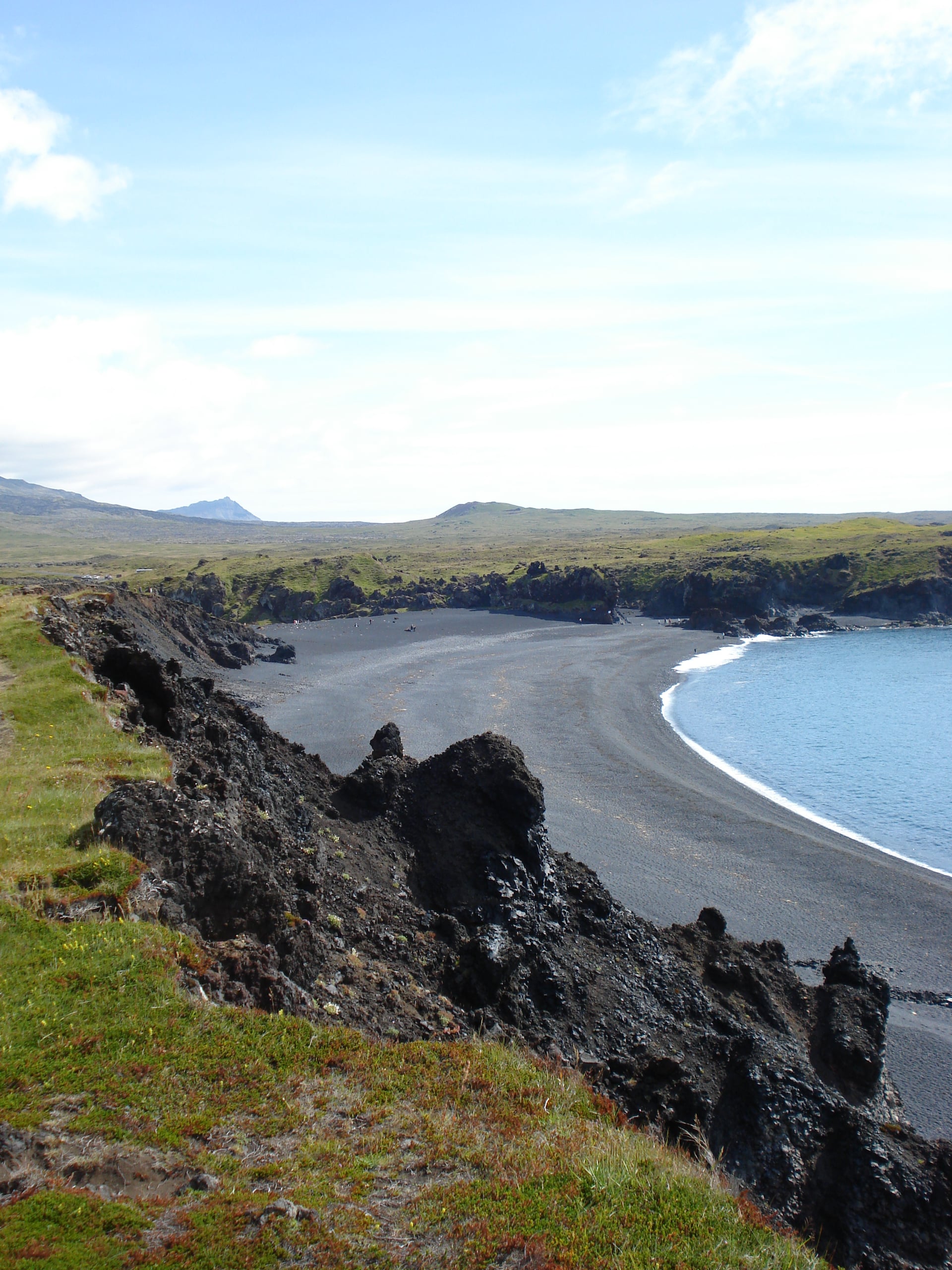
West Iceland's official description begins with the visible shape of the place: a beautiful pebbled beach, with mysterious rocks emerging from the ocean, and one of the few places on this dramatic coast where people can descend to the sea. That last point matters. Along much of this side of Snæfellsnes, cliffs dominate the edge and access is broken. Djúpalónssandur feels different because it opens a path down. The descent itself changes your relationship to the coast. You do not only look at the Atlantic from above; you go down into its stony margin.
The first surprise for many visitors is the texture underfoot. Djúpalónssandur is often called a black beach, and that is true in a broad sense, but what stays with people is usually not sand at all. It is the pebbles. The shore is made of dark, rounded, polished stones that turn the beach into something almost acoustic. Walking there does not feel like walking on ordinary coast. The whole place seems to shift, click, and answer back under every step. This is one reason the beach feels older than a postcard. It is tactile in a way many scenic stops are not.
That tactility deepens when you remember the human history tied to the neighboring cove of Dritvík. The place was not simply admired; it was worked. West Iceland notes the strength stones on the beach that once tested whether a man was fit for fishing-station life: Fullsterkur at 154 kilograms, Hálfsterkur at 100, Hálfdrættingur at 54, and Amlóði at 23. The old judgment was blunt. If you could not lift the Weakling stone, you were considered unfit for a fisherman's life. It is hard to imagine a more physical archive of labor than that. The beach still holds the standards by which bodies were measured.
Those stones are not a gimmick when understood properly. They are one of the clearest ways Icelandic coastal history becomes immediate. Fishing on this coast demanded strength, endurance, and judgment, and Djúpalónssandur still preserves the ritual by which people tested whether they belonged to that life. For tourists, the stones can be playful on the surface. For a writer, they should also be sobering. They remind us that the beauty of Snæfellsnes did not spare anyone from hard work. It only framed it.
The shore also carries more recent memory in the remains of a shipwreck. West Iceland notes that fragments from a wreck can still be seen on the beach, and that detail changes the mood at once. Djúpalónssandur is not only geological and historical in a deep-time way. It is also maritime in a painfully modern sense. Twisted iron against black stone becomes a kind of compact elegy. The coast is beautiful, but it is not benign. Wreckage prevents romantic distance.
That harder mood suits the physical form of the place. The offshore rocks do not decorate the scene so much as complicate it. They make the waterline feel interrupted, watched, and slightly dangerous. Even in fair weather, Djúpalónssandur can feel like a place where the sea still has the upper hand. This is part of what makes it different from beaches that are famous mainly for color. The blackness here matters, but the deeper impression comes from force. The land has opened a way down, but it has not made any promise of softness.
The Snæfellsjökull park material helps place that force in a larger setting. The national-park brochure describes the south coast of Snæfellsnes as a landscape of ancient sea cliffs, lava fields, and surf-carved formations, all within a district shaped by Snæfellsjökull's volcanic system. Djúpalónssandur belongs fully to that world. It is not an isolated beach detached from the glacier-volcano story. It is one of the places where that story becomes coastal and walkable. Lava, cliff, pebble beach, and ocean pressure all meet in one compressed space.
The saga atmosphere of the district also reaches here. The Environment Agency brochure notes that in Bárðar saga Snæfellsáss, Bárður is said to have walked ashore at Djúpalón and taken a bath in Bárðarlaug. That detail may sound almost incidental, but it matters. It means Djúpalónssandur is not only a geological or maritime place in local memory. It is also part of a legendary entrance into the wider Snæfellsnes story-world. In a landscape this strange, the saga connection feels less like literary garnish and more like an older form of landscape reading.
What makes Djúpalónssandur especially strong on a private itinerary is that it rewards silence better than explanation. There are facts here, and they matter. The lifting stones matter. The wreck matters. The volcanic setting matters. But after a certain point, the place begins doing its own work on people. The dark beach stones, the broad horizon, the iron remains, and the surrounding formations produce a kind of stern concentration. Travelers often speak more quietly here, even if they do not know exactly why.
This is also why the beach photographs so well without becoming empty image. The stones give the foreground real character. The wreckage introduces narrative. The offshore shapes keep the frame from flattening. And when weather moves through, the whole beach changes tone immediately. In sun, it can look sculptural and sharply defined. Under cloud, it becomes denser and more inward. Djúpalónssandur does not need dramatic tricks. It already has enough structure to hold mood naturally.
Djupalonssandur is richer than the phrase black beach on Snaefellsnes suggests. Travelers need to understand what makes it different from other dark-sand locations, what the lifting stones mean, why wreckage is still part of the site, and whether the beach is mainly scenic or historically important. The answer is both. It is one of the peninsula's clearest places to feel how landscape and livelihood once pressed directly against each other.
There is also a practical truth behind the beauty: this is not a beach to treat casually. The Atlantic edge remains exposed, and the atmosphere of the place makes more sense if you approach it with a little humility. Djúpalónssandur may be a popular stop now, but it was shaped by a harsher coastline than modern tourism sometimes admits. The old fishing tests and the surviving iron both say the same thing in different languages: this shore was never ornamental first.
What many travelers remember after leaving Djúpalónssandur is not one iconic photograph but the sensation of having stood somewhere physically honest. The beach does not flatter you. It does not soften its history. It gives you black pebbles, iron fragments, difficult old standards, and a sea that still looks capable of taking more than it gives back. That honesty is what makes the place beautiful. Djúpalónssandur is not merely dramatic. It is morally textured, and that is much rarer.