Iceland Travel Guides
Eldhraun: Moss, Catastrophe, and the Quiet After Fire
A fuller private guide to Eldhraun, with the Skaftá Fires of 1783 to 1784, moss-covered lava, ecological succession, lost farms, and the quiet after one of Iceland's greatest eruptions.
GlaciGo Iceland / May 2026 / 10 min read
Eldhraun is one of those Icelandic landscapes that can fool the eye completely if you only give it a minute. From the road, it can look soft, almost restful: endless moss, low undulations, quiet distance, no obvious violence left in view. Many travelers remember it as a greenish carpet of lava beside the South Coast road, and that first impression is understandable. But Eldhraun only becomes interesting when you hold two truths together at once. It is one of the gentlest-looking landscapes in South Iceland, and it came from one of the harshest events in Icelandic history.
Visit South Iceland names the place Skaftáreldahraun lava field and begins with the essential fact: in 1783 a huge lava flow streamed from Lakagígar in what became known as the Skaftá Fires. The same official page describes it as one of the greatest lava flows from a single eruption in world history and gives the broad dimensions that still shape how the place should be understood today, about 16 cubic kilometers in volume and roughly 580 square kilometers in area. Those numbers matter, but not because visitors need a geology lesson at the parking area. They matter because they explain why Eldhraun does not feel like a neat roadside feature. It feels like a country of its own spread low across the land.
The South Iceland text also explains how the lava moved with devastating practical force. It filled the gorges of the Skaftá and Hverfisfljót rivers, then swept down in two branches into inhabited areas and spread over the lowlands, laying waste to farms. That sentence should slow any writer down. Eldhraun is not only scenic lava. It is lava that entered human space, erased working landscapes, and permanently changed routes, fields, and memory. A good article cannot treat it as a decorative foreground for road-trip photography and call that enough.
The Environment and Food Agency's Lakagígar guide helps deepen that historical frame. It describes the Skaftá Fires of 1783 to 1784 as the single most catastrophic event since human settlement in Iceland. Poisonous ash settled over much of the country, gases hung in the air, pastures were poisoned, livestock died in enormous numbers, and one in five Icelanders died during the period known as Móðuharðindi, the Hardships of the Mist. That wider catastrophe matters even when you are standing in a quiet moss field near Kirkjubæjarklaustur. Eldhraun is part of that story. The softness you see now sits on top of an event that reached far beyond local drama and into national trauma.
The same official guide makes another point that belongs near the center of any serious article: the lava that flowed from the Laki craters covered 0.5 percent of Iceland and split into two branches, of which Eldhraun was the western one. It records that the Skaftá River dried up on the third day of the eruption and that the lava had traveled forty kilometers and reached the coastal plain by the fifth day. A week later, lava also moved down the course of Hverfisfljót, filling its canyon so thoroughly that the river later followed a different route. This is a useful reminder that Eldhraun is not just a surface layer. It is a force that reorganized hydrology as well as land use.
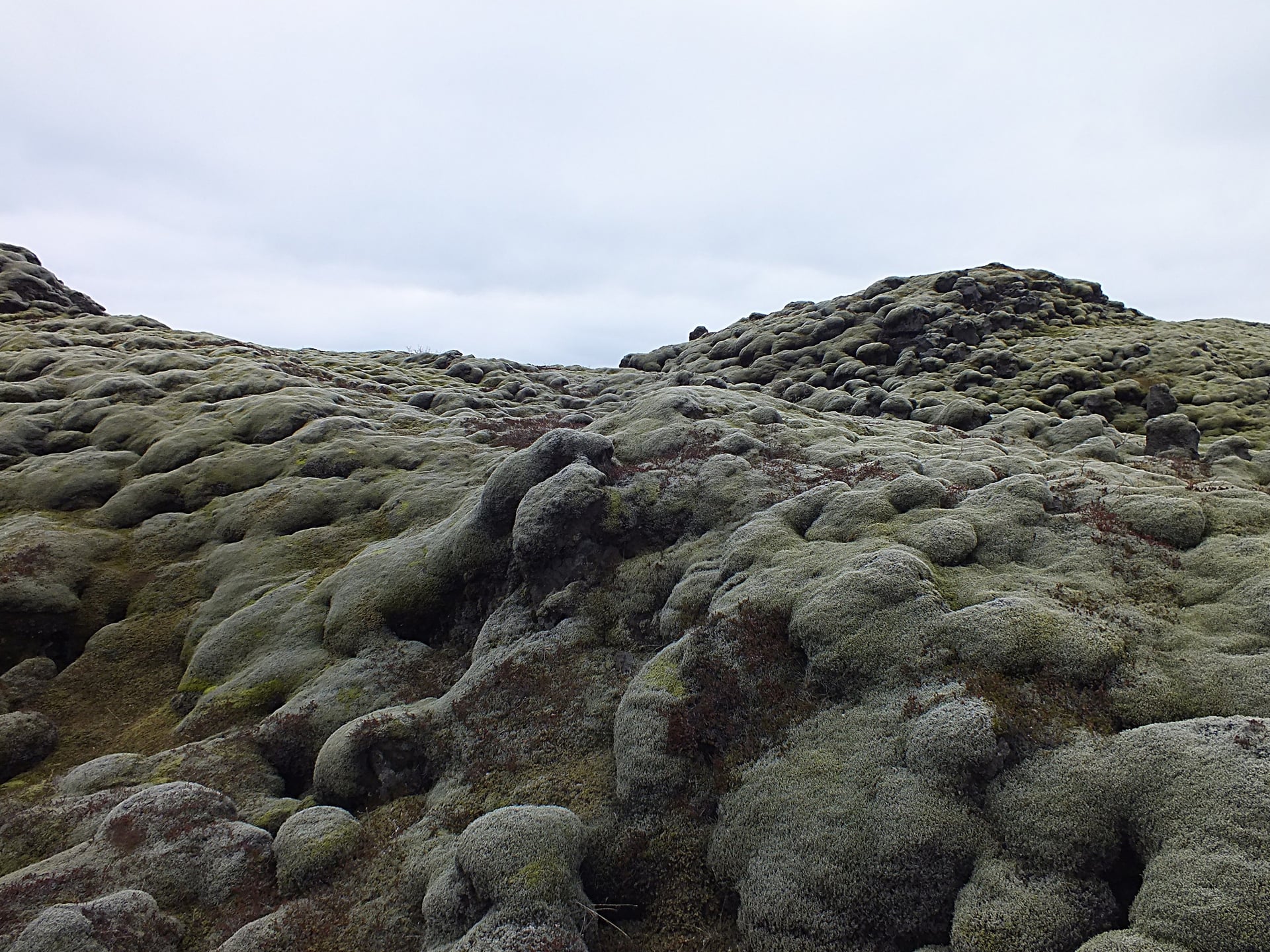
And yet the modern emotional experience of Eldhraun is not mainly terror. It is hush. That contrast is what gives the place its peculiar power. The Environment and Food Agency describes the lava as now almost completely vegetated from the coastal plain all the way up to the crater rims, and presents the area as a textbook example of ecological succession: first bare lava, then moss, followed by grass, then shrubs, and finally trees. That framing is valuable because it lets visitors read the landscape not only as aftermath, but as time made visible. Eldhraun is one of the clearest places in Iceland to see recovery without forgetting damage.
The moss itself deserves more respect than the usual quick tourist language gives it. The official Lakagígar guide explains that plant development here has been shaped by volcanism, above-average rainfall, and a relatively mild climate, and that heavy rain is one reason mosses and lichens do especially well in the area. It also notes that growth remains slow. In other words, the field may look lush, but it is not casual. What appears thick and forgiving is actually the result of long, patient development on difficult ground. This is why walking carelessly or treating lava moss as a disposable photo surface always feels especially wrong in Iceland. At Eldhraun, the beauty is inseparable from fragility.
That fragility changes the moral tone of the visit in a useful way. Eldhraun is not a destination that asks for conquest. It asks for steadiness. Visit South Iceland describes a simple stop with a car park and information board a few kilometers before Kirkjubæjarklaustur, and that modest setup feels exactly right. The place does not need overdesign. The stronger experience is simply to stop, look across the moss-covered lava, and let scale work on you slowly. In a country full of heroic reveals, Eldhraun is more about breadth than climax.
It also belongs to a larger district where geology and historical memory keep folding into each other. The South Iceland material around Kirkjubæjarklaustur and the chapel of Reverend Jón Steingrímsson makes clear that this was the human center living closest to the advancing lava in the summer of 1783. Jón Steingrímsson's Fire Mass, delivered in late July while the eruption was still terrifyingly active, has remained one of the best-known stories attached to the event. Whether approached as faith, communal memory, or historical drama, the story matters because it reveals how people living beside lava tried to make meaning inside disaster. Eldhraun is therefore not only geological ground. It is also devotional, cultural, and remembered ground.
That gives Eldhraun a different personality from other famous lava fields in Iceland. Berserkjahraun on Snæfellsnes is held partly in saga imagination. Hallmundarhraun and the caves beneath it often lead into archaeology and outlaw memory. Eldhraun feels more collective and heavier. Its story is not one of a single hero or mythic character. It is about an entire region meeting a long eruption, losing farms, breathing poisoned air, and then living afterward on transformed land. Even if a visitor knows only the broad outline, the field carries that emotional weight.
Visually, the field can seem almost too uniform until you spend time with it. Then subtleties emerge. The lava rolls rather than lies flat. The moss changes color with weather and wetness. Dark fissures and harder ridges remain visible beneath the soft cover. The whole place begins to feel less like a green blanket and more like a body underneath fabric, with form still pressing through. This is why Eldhraun photographs best when you resist trying to make it dramatic in the usual Iceland way. It is stronger in low light, mist, or patient lateral views that let repetition and scale do the work.
There is also something deeply South Icelandic in the way the field sits beside ordinary movement. You do not need a super jeep or a major hike to meet Eldhraun. It is there near Route 1, close enough to many travelers' existing path that they can encounter one of Iceland's greatest eruption landscapes almost accidentally. That accessibility is a gift, but it also creates a responsibility in the writing. A good guide should help visitors understand that this is not merely a convenient stop before or after Kirkjubæjarklaustur. It is one of the clearest places on the South Coast to feel what volcanic history looks like after two and a half centuries of weather and growth.
Eldhraun benefits from being explained on its own terms because traveler questions around it is unusually layered. People want to know whether the moss-covered lava field near Klaustur is worth stopping for, what the name means, how it connects to Laki and the Skafta Fires, whether it is one of the largest lava fields in Iceland, and why it looks so soft despite its violent origin. The strongest way to understand it is that Eldhraun matters precisely because it contains those contradictions. It is large but quiet, catastrophic in origin yet gentle in appearance, easy to access but not shallow in meaning.
What stays with many travelers after Eldhraun is not one single viewpoint, but a change in emotional scale. You begin by seeing a scenic roadside lava field. You leave having understood that the soft moss is growing across a catastrophe, that the land beneath it once moved fast enough to dry rivers and erase farms, and that Icelandic landscape can hold memory in forms much subtler than monuments. Eldhraun lingers because it turns disaster into something readable without ever pretending the disaster was small.