Iceland Travel Guides
Forest Lagoon: Fjord Warmth, Woodland Calm, and Akureyri's Softest Shift
A fuller private guide to Forest Lagoon, with its Vaðlaskógur setting, Eyjafjörður view, geothermal water from Vaðlaheiði, and the reason it fits Akureyri so naturally.
GlaciGo Iceland / May 2026 / 10 min read
Forest Lagoon is one of those places in Iceland that makes immediate sense and then keeps deepening the longer you sit with it. The first attraction is obvious: warm water, a wide view over Eyjafjörður, and the strange pleasure of bathing among trees in a country more often imagined through lava, waterfalls, and open moorland than through woodland calm. But the place becomes more interesting when you stop treating it as merely another geothermal spa and start reading it as a very North Iceland answer to a particular question. What should a modern lagoon near Akureyri feel like if it truly belongs to its region? Forest Lagoon's best answer is not spectacle. It is atmosphere, proportion, and a quiet confidence rooted in Vaðlaskógur itself.
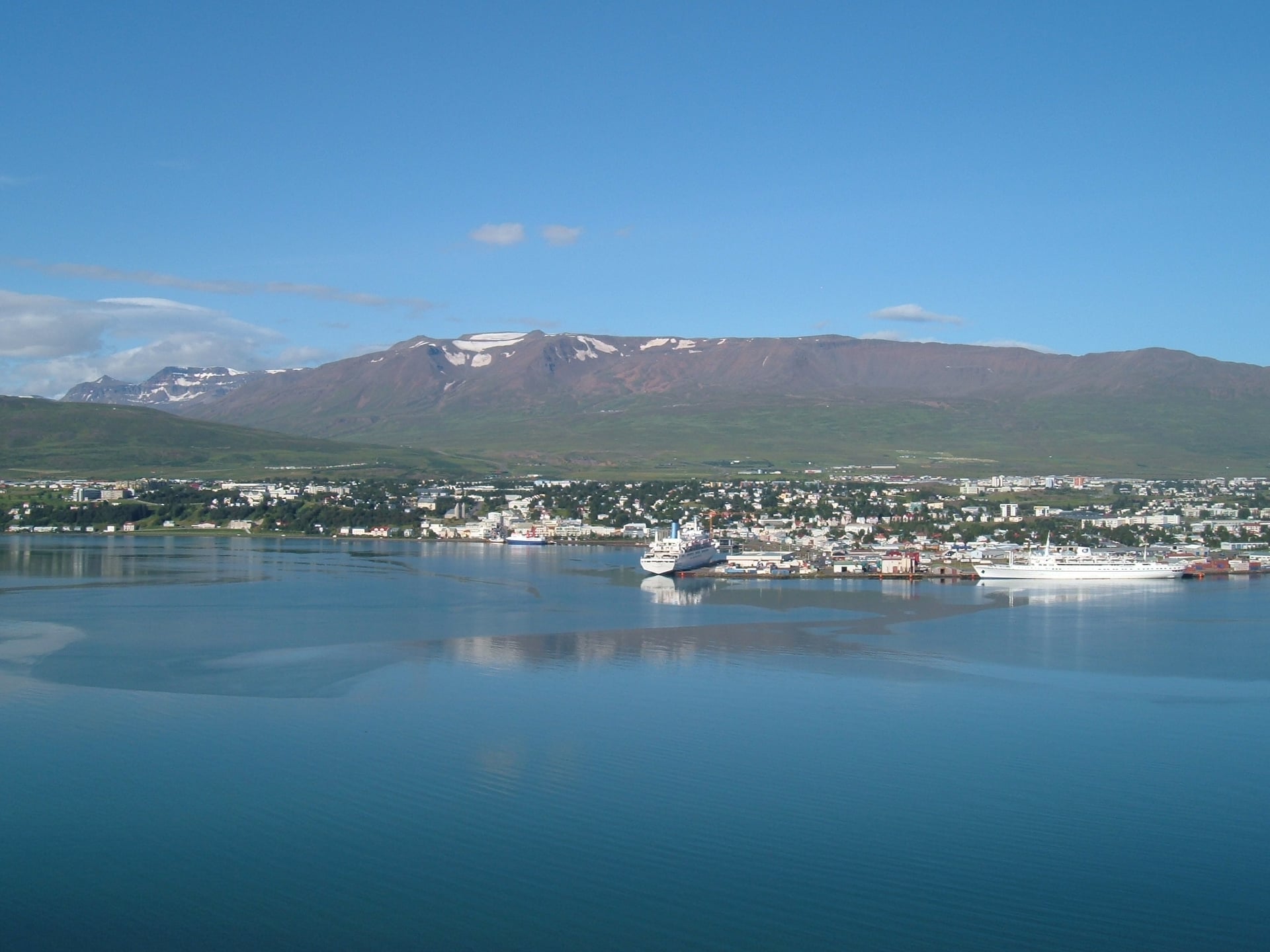
The official Forest Lagoon site makes the basic geography clear. The baths sit in Eyjafjarðarsveit, opposite Akureyri, only about five minutes from the city center. The same source emphasizes the view over Eyjafjörður, one of Iceland's longest fjords, and the surrounding birch and pine trees of Vaðlaskógur. Visit Akureyri describes it similarly, placing the lagoon just a few minutes from town and making it part of the region's larger set of attractions rather than an isolated spa destination. This matters because Forest Lagoon works best when understood in relation to Akureyri. It is not remote enough to feel like an expedition, and that is part of its charm. It offers a clean, restorative shift of mood without asking you to leave the urban and travel rhythm of North Iceland behind.
That closeness to town changes the emotional role of the place. Blue Lagoon often arrives as a major standalone experience. Myvatn Nature Baths can feel woven into a larger volcanic circuit. Forest Lagoon sits in a different position. It works as a soft landing after arrival in Akureyri, a recovery stop after a longer North Iceland driving day, a warm evening after whale watching or fjord weather, or a quieter way to close out an itinerary that has been full of road miles and exposed landscapes. traveler questions around Forest Lagoon often starts with tickets, opening hours, or comparisons with better-known spas, but the deeper reason people remember it is this one: it fits real travel life unusually well.
The official North Iceland tourism material adds another important layer by noting that the pools are heated with all-natural geothermal water sourced from the mountain behind the lagoon, Vaðlaheiði. That detail helps explain why the place feels grounded rather than themed. Forest Lagoon is not trying to imitate a forest fantasy. It is sitting in a real local geography defined by a wooded slope, a fjord view, and geothermal energy rising from the mountain just behind it. This interplay between mountain, forest, and hot water gives the lagoon a regional intelligence that many prettier but flatter spa experiences lack.
Forest Lagoon's own site also gives the design logic in a useful way, even if it does so with the modesty of hospitality language rather than architectural theory. It says that great ambition was put into the design so guests could experience the view, the tranquility, and the energy of the forest that surrounds the baths. That sentence deserves to be taken seriously. The experience here is built not around one overwhelming icon but around alignment. The pools do not compete with the fjord. The sauna does not close the landscape out. The bistro is meant to complete the mood rather than distract from it. Good Icelandic travel design often works like this at its best: it edits the environment just enough to make you more available to it.
Official details about the facilities help clarify the physical experience. Forest Lagoon has two geothermal pools, a larger one of 530 square meters and a smaller one of 330 square meters, both kept at around 37°C according to the official site. There is also a Finnish dry sauna at around 80°C with low humidity, a cold pool around 11°C, and Forest Bistro on site. These facts are practical, but they also shape the personality of the lagoon. The two-pool structure matters because it creates contrast inside the same destination. One space feels more social and outward-looking, while the other can feel calmer and more reflective. That distinction is one reason the place tends to work for different kinds of travelers at once.
What really separates Forest Lagoon from many Iceland bathing stops, though, is the woodland factor. Iceland is not a country tourists usually describe first through forest bathing, and that alone changes the emotional texture. Vaðlaskógur creates shelter. It softens the edges of the experience. Instead of being held only by raw geology or wide treeless exposure, you are sitting in warm water with trunks, branches, and filtered forms close by, while the fjord opens outward in the distance. That combination makes the lagoon feel both intimate and open, which is harder to achieve than it sounds. Many scenic baths deliver panorama without intimacy or intimacy without real depth of view. Forest Lagoon manages both.
This also makes the spa especially strong in weather that might feel less ideal elsewhere. In wind, in low cloud, in light rain, or in the colder shoulder seasons, the forest setting gives the experience a kind of emotional insulation. The official site is open every day from 10 a.m. to midnight, and that long operating window matters because evening visits can be particularly satisfying in the north. A late soak after dinner or after a day of movement has a different rhythm here than it does in more crowded or more obviously performative lagoons. In winter, the darkness and steam deepen the sense of enclosure. In summer, the light stretches the whole place into a softer, slower evening.
There is also a specifically Akureyri pleasure in how easy the lagoon is to combine with the city's own character. Akureyri is one of Iceland's few places where urban life in the north feels complete: church, harbor, culture, cafés, botanical garden, hillside streets, and a lived civic rhythm. Forest Lagoon does not pull against that identity. It complements it. A traveler can spend the day walking through town, tracing harbor light, browsing design shops, or driving a nearby section of North Iceland, and then cross over to the eastern side of the fjord for a completely different register of calm. That movement from city to wooded geothermal quiet, all within minutes, is not common in Iceland. It is part of what makes the stop feel surprisingly intelligent on a private itinerary.
From a food-and-rest perspective, Forest Bistro deserves mention not because it turns the lagoon into a gastronomic destination, but because it rounds the place out. The official bistro page presents it as a wood-clad restaurant space with a fireplace, light dishes, and a view over Eyjafjörður. That may sound like a supporting detail, yet it matters for the shape of a visit. One of the differences between a good bathing stop and a merely photogenic one is whether you can stay inside its mood without being forced abruptly back into logistics. A bistro with warmth, light, and view helps the place keep its coherence. You are not simply bathing and leaving. You can pause, eat, and let the experience taper rather than break.
Forest Lagoon also works well because it does not try too hard to become mythic. It has no need to borrow saga grandeur or exaggerated folklore to justify itself. In a country where many places naturally come with eruption stories, medieval memory, or famous visual drama, there is something refreshing about a destination that succeeds through care, setting, and lived use. If there is a story here, it is a modern Icelandic one: geothermal energy, thoughtful design, regional tourism confidence, and the choice to build a place of warmth directly into the everyday landscape of North Iceland rather than far away from it.
That modern story is strengthened by the timeline. Official Visit Akureyri material for new local services places Forest Lagoon's opening in spring 2022. This is useful because it explains why the lagoon still feels relatively fresh in the regional imagination. It is new enough to represent recent confidence and investment in North Iceland, but settled enough now that it has moved past novelty. The place is no longer just the new lagoon near Akureyri. It is already becoming part of how travelers naturally picture an Akureyri-area stay.
For photographers and slower travelers, the lagoon offers a different kind of visual reward from the more postcard-heavy geothermal sites elsewhere in Iceland. Forest Lagoon is not mainly about one hero shot. It is about layers: steam against trees, fjord light beyond the pool edge, snow or darkness in season, the contrast between warm water and cool air, and the sightline back toward Akureyri's side of Eyjafjörður. Even when people take many photos here, what they often remember most is not a single image but the atmosphere between images. That is a good sign. It means the place survives real experience rather than existing only as content.
From an itinerary perspective, Forest Lagoon is one of the smartest North Iceland additions for travelers who want restoration without losing a day to transfer time. It can be the anchor of an Akureyri afternoon, the warm ending after Goðafoss or a northern coastal route, or the easiest indulgence on a tighter Ring Road schedule. It is also particularly strong for couples, parents who need a gentler stop, and travelers who have already seen several major geothermal areas and want one that feels more personal and less monumental.
Forest Lagoon deserves its own fuller guide because traveler questions here is not the same as general Akureyri intent. People are looking for whether the lagoon is worth it, how it feels compared with other Iceland spas, what makes its location special, and whether it belongs in a North Iceland itinerary even for travelers already visiting Myvatn or GeoSea. The fuller way to understand it is yes. Forest Lagoon matters because it offers one of Iceland's most coherent modern bathing experiences: regional, well-sited, beautifully paced, and unusually easy to love in real life rather than only in theory.
What stays with many visitors after Forest Lagoon is often not only the heat of the water or the fjord view, though both matter. It is the sense of balance. Trees close by, mountains behind, Akureyri across the water, steam rising into northern air, and enough time to let the body come down from travel. Forest Lagoon lingers because it understands something simple and valuable: in Iceland, not every unforgettable place has to be wild in the obvious sense. Some are memorable because they make warmth feel precisely placed.