Iceland Travel Guides
Hornstrandir: Fox Country, Old Silence, and the Wildest Edge of the Westfjords
A fuller private guide to Hornstrandir, with its protected wilderness logic, fox habitat, boat access, cultural remnants, and the reason this Westfjords reserve feels genuinely beyond the road.
GlaciGo Iceland / May 2026 / 10 min read
Hornstrandir is one of the rare places in Iceland where the idea of wilderness stops sounding romantic and starts sounding specific. People use the word too easily in travel writing. They use it for scenic drives, for remote viewpoints, for places with few cafés, or for any dramatic coast without much housing. Hornstrandir is different. This is not simply a beautiful part of the Westfjords. It is a protected reserve where roads do not continue, infrastructure is deliberately limited, natural forces are meant to remain dominant, and the human presence is supposed to feel temporary rather than organizing. A serious article about Hornstrandir has to start there or it will miss the point.
The Environmental Agency of Iceland says this plainly in its official introduction. The guiding light for the reserve is to protect a large area with unique nature and animal life where peace reigns and infrastructure is not dominant, and to let natural forces reign without human interference so future generations can still experience such places. That is unusually clear language for a public protected-area page, and it should shape the whole article. Hornstrandir is not a place improved by convenience. Its value is bound up with the fact that convenience never fully takes over.
The same official material explains why the reserve matters on both Icelandic and international terms. Hornstrandir was declared protected in 1975, revised in 1985, and covers about 589 square kilometres in the northern part of the Westfjords. The reasons for protection include wildlife, geology, and cultural remnants from an earlier era when people still lived there. That last part is essential. Hornstrandir is not empty in a simple sense. It is post-inhabited. The absence that travelers feel there has history inside it.
This is one of the strongest emotional differences between Hornstrandir and many other remote Iceland landscapes. The place was not always imagined only as reserve, hiking country, or fox habitat. People lived there in farms and seasonal settlements until the twentieth century, and the official protection page still points to those traces as part of what needs preserving. That means the silence in Hornstrandir is not primordial silence alone. It is also the silence left after departure. Ruins, place names, landing points, and old paths do not make the wilderness weaker. They make it more human and more haunting.
Visit Westfjords presents Hornstrandir in a more tourism-facing tone, calling it the ultimate destination for adventure seekers and nature lovers and emphasizing its untouched remoteness. That description is useful so long as it is disciplined by the official conservation frame. Travelers do come here for adventure, but Hornstrandir is not an adventure park. The reserve does not exist to provide intensity on demand. It exists first as a protected place, and only second as a place visitors may enter carefully. That difference matters enormously for the tone of a good guide.
Access immediately reveals that difference. The Environmental Agency's useful-information page notes that the most common way to reach Hornstrandir is by sea, with scheduled departures from Ísafjörður, Bolungarvík, and Norðurfjörður at Strandir, while some overland access is possible from Ófeigsfjörður or Dalbær. Helicopter landings are not permitted in the reserve, and travel planning obligations apply in parts of the year because vegetation, paths, and the biosphere are fragile. This is exactly the kind of information that changes the emotional scale of a trip. You do not casually drift into Hornstrandir in the same way you drift into a roadside attraction. Reaching it requires intention, and that intention is part of the ethics of being there.
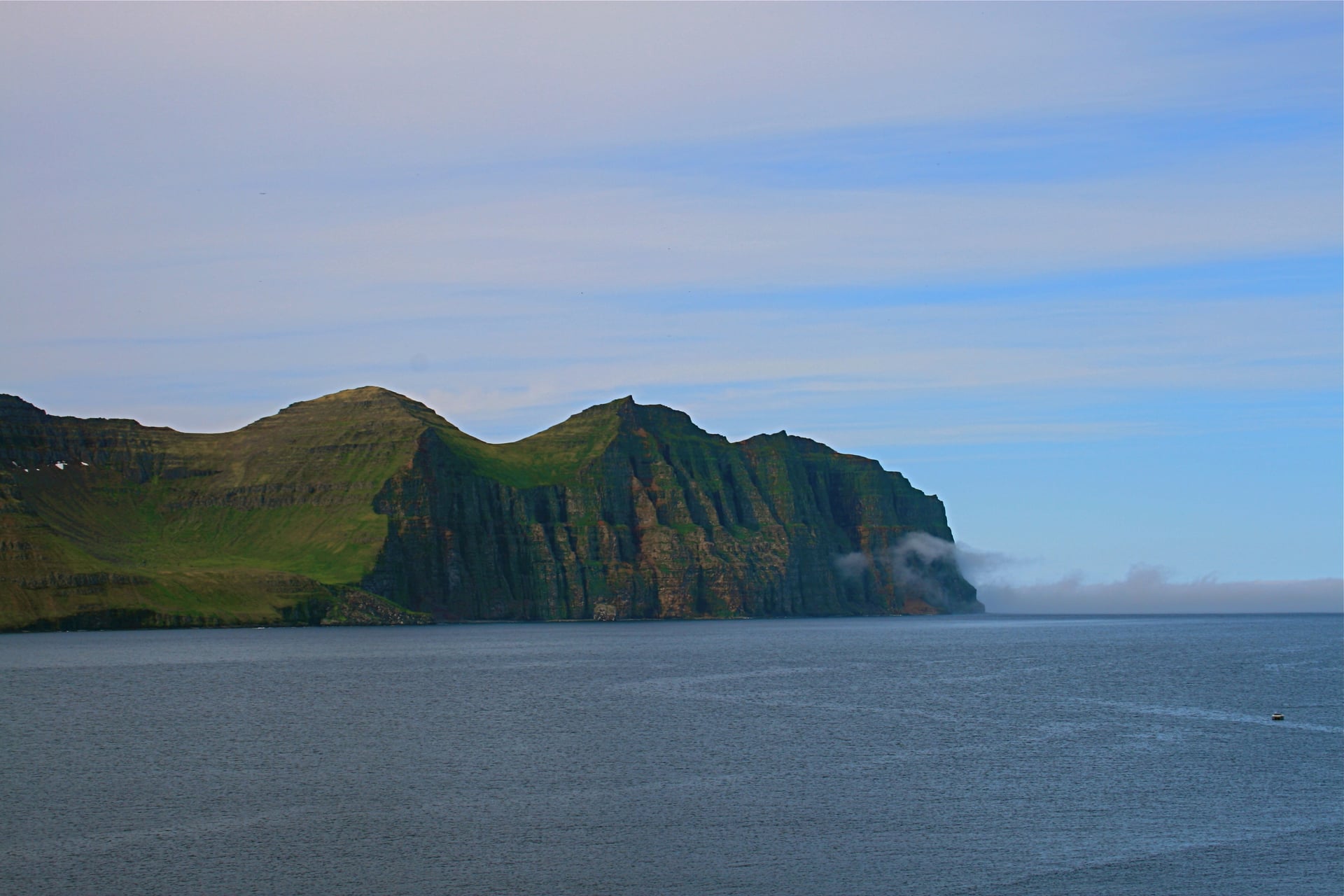
The geography reinforces everything. Hornstrandir occupies the northwesternmost edge of the Westfjords, beyond the usual road logic of the peninsula. Its fjords, valleys, scree slopes, marshes, ridges, and sea cliffs do not compose themselves into one clean viewpoint. The reserve is too large and too self-contained for that. Even strong iconic names such as Hornvík or Hornbjarg are only parts of a broader wilderness whole. This matters because many destination articles fail when they try to reduce the area to a single poster image. Hornstrandir is not one sight. It is a condition.
The wildlife is one of the clearest reasons that condition matters. The Environmental Agency explicitly calls Hornstrandir one of the most important homes for foxes in Europe, and notes that many tourists come specifically to see and photograph the Arctic fox in both winter and summer. This is not a trivial wildlife bonus. The fox has become one of the great emotional gateways into the reserve because it represents exactly the kind of life Hornstrandir still protects well: intelligent, adapted, watchful, and able to exist in a landscape where humans are no longer setting the daily terms.
Birdlife matters just as much, though in a different register. The official protection text and the Westfjords material both point toward gigantic bird cliffs and important seabird habitats. In Hornstrandir, birdlife is not concentrated into one easy roadside observation deck. It belongs to a broader system of cliffs, inlets, and remote nesting grounds where the birds help define the reserve's scale. This is one reason people often leave with a feeling not only of seeing wildlife but of entering a wildlife-shaped world.
The geology deserves more attention than it usually gets in short travel pages. The Environmental Agency notes that the mountains around Jökulfirðir show clearly how the area was built up by a series of volcanic eruptions, with lava layers visible and sediment layers in between. That detail is excellent because it anchors the reserve in Westfjords deep time. Hornstrandir is not just remote because roads do not go there. It is remote because it belongs to an older Iceland, one written in stratified rock, long erosion, and coastline exposure rather than recent eruptions and tourist-friendly narratives.
What many travelers remember most, though, is not any single fact but the feeling of proportion. In Hornstrandir, humans become small very quickly and stay that way. Distances are not enormous by continental wilderness standards, but they are large enough, trackless enough in spirit, and weather-sensitive enough to alter your sense of control. A normal travel mentality becomes less useful. You stop thinking in terms of collecting stops and start thinking in terms of landing, walking, staying dry, reading the sky, and respecting how much the place does not need you there.
That is why Hornstrandir is one of Iceland's strongest correctives to the faster habits of scenic tourism. You cannot dominate it through efficiency. Even short boat-based visits tend to carry a different psychological texture from ordinary day trips because the reserve remains the governing partner. The weather may change the mood. The landing point may matter more than expected. The route may feel longer because of the ground. None of this is a flaw. It is the reserve telling the truth about itself.
Hornstrandastofa, the official visitor centre in Ísafjörður, deserves mention because it helps translate that truth into responsible planning. The Environmental Agency places the centre at Silfurgata 1 in central Ísafjörður and notes that rangers there can assist with trip planning and provide a small exhibition about life in Hornstrandir. This is exactly the kind of preparatory step a serious traveler should value. A good Hornstrandir experience begins before the boat leaves. The reserve rewards people who arrive with more humility than bravado.
From an itinerary perspective, Hornstrandir is not for every Iceland trip, and saying that honestly is part of respecting it. It is best for travelers who truly want remoteness, who can handle variable weather and logistics, and who understand that the emotional reward comes from entering a place where the world has not been simplified for them. For the right traveler, that reward is immense. For the wrong one, the reserve can feel inconvenient simply because it refuses to perform convenience.
Hornstrandir benefits from a fuller explanation because traveler questions around it is unusually layered. Some travelers are asking whether it is worth the cost and effort. Some are searching for foxes. Some want to understand whether day tours are meaningful. Some are trying to grasp the difference between Hornstrandir as a reserve and the rest of the Westfjords. The stronger answer is that Hornstrandir is not just another scenic sector of Iceland. It is one of the country's clearest remaining lessons in how landscape, wildlife, and memory can still outrank infrastructure.
What stays with many visitors after Hornstrandir is often not only the foxes, the cliffs, or the old ruins, though all of those can matter deeply. It is the sensation of having spent time in a place that was allowed to remain more itself than most travel landscapes ever are. Hornstrandir lingers because it gives you a rarer form of beauty: one in which protection, absence, and restraint are part of what makes the place unforgettable.