Iceland Travel Guides
Kleifarvatn: Dark Water, Fault Lines, and the Quiet Drama of Reykjanes
A fuller private guide to Kleifarvatn, with depth, earthquake history, geothermal inflow, photography, folklore, and the lake's quiet role in Reykjanes.
GlaciGo Iceland / May 2026 / 10 min read
Kleifarvatn does not overwhelm people in the loud way some Icelandic landmarks do. It is not a waterfall hurling itself into a canyon, not a glacier lagoon crowded with floating ice, not a geothermal field announcing its heat with steam in every direction. Its power is quieter and, for many travelers, stranger. The lake sits between mountain ridges on the Reykjanes Peninsula with a kind of dark, self-contained calm. At first glance it can seem almost severe: long shoreline, little vegetation, volcanic slopes, cold light, and a mood that changes completely with the weather. Stay longer, though, and the place starts to reveal why it matters. Kleifarvatn is one of those Icelandic landscapes where stillness is not the opposite of activity. It is simply the surface expression of deeper forces moving below.
Visit Reykjanes gives the essential facts clearly. Kleifarvatn is about 10 square kilometers in area, the largest lake on the Reykjanes Peninsula, the third largest in southern Iceland, and at around 97 meters deep, one of the deepest lakes in the country. It lies between Sveifluhals and Vatnshlid, in the wider Krysuvik district. Those figures help orient a visitor, but the official description also includes the more interesting details: the catchment area is small, the surface discharge is very limited, hot water enters the southern part of the lake, and earthquakes around the year 2000 likely opened fissures at the bottom, causing the lake level to diminish. In other words, this is not simply a scenic body of water. It is a lake whose visible shape is entangled with tectonics, groundwater, and geothermal processes.
That is what makes Kleifarvatn so compelling in a Reykjanes itinerary. So much of the peninsula can be read through obvious signs of volcanic activity: lava fields, steaming ground, crater rows, exposed fissures. Kleifarvatn asks you to read geology differently. The drama is not only around the lake; it is in the lake's behavior. A visitor who knows about the post-2000 change in water level is seeing more than a view. They are seeing a landscape that responded physically to earthquakes. That kind of awareness changes the emotional temperature of the stop. The shore no longer feels static. It feels provisional.
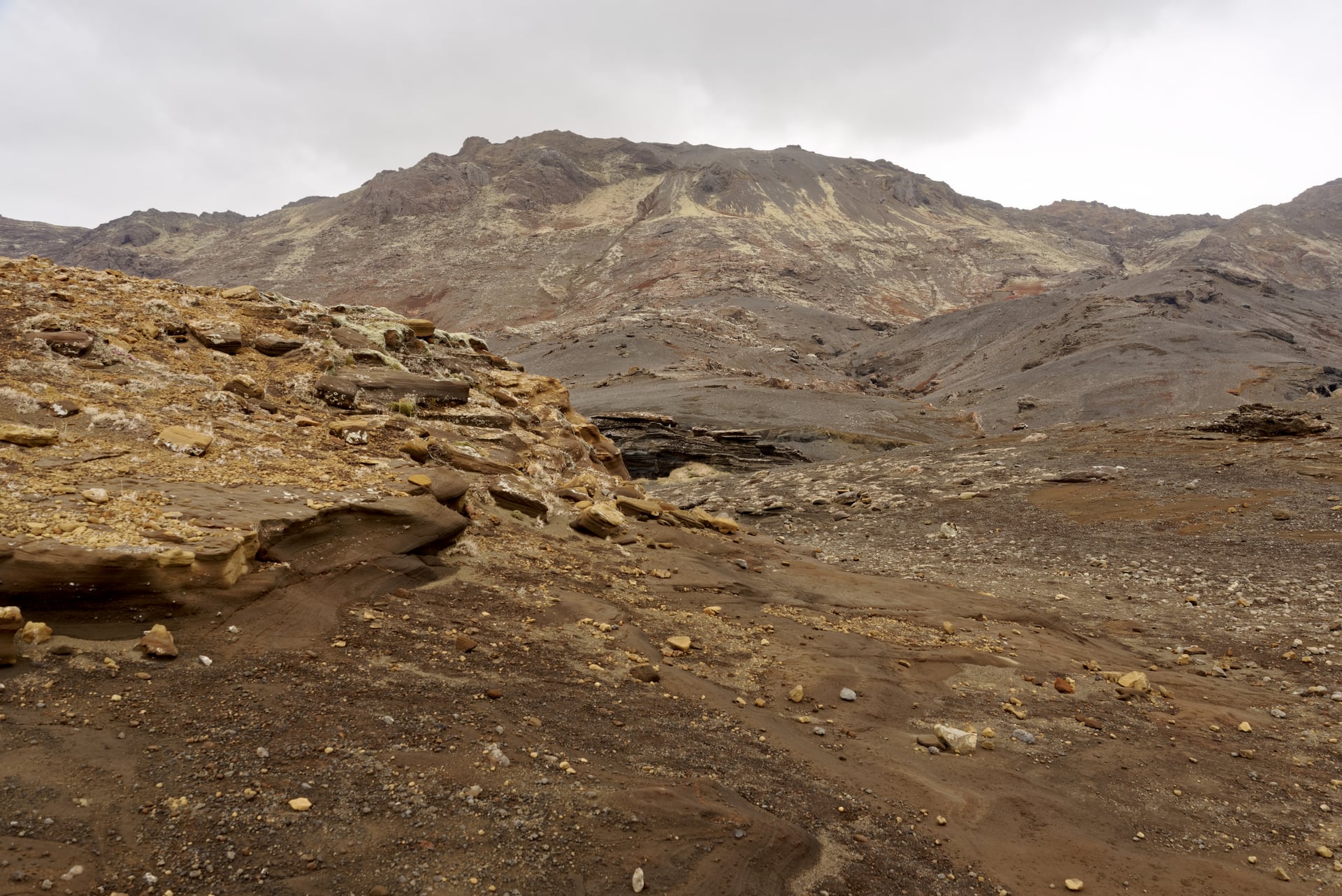
The setting matters just as much as the science. Reykjanes Geopark describes the lake as filling a depression between Brennisteinsfjoll and the hyaloclastite ridge of Sveifluhals. Even without translating every geological term, a traveler can feel the architecture of the place. The ridges do not frame the lake gently; they hold it. On grey days Kleifarvatn can look almost metallic, with the slopes around it appearing stripped back to structure. On brighter days the blue of the water becomes more pronounced, and the surrounding volcanic forms look cleaner and more graphic. Either way, the landscape reads in strong lines rather than soft abundance.
That sternness is part of the attraction. Iceland is often sold through abundance: waterfalls everywhere, green summer valleys, dramatic coastlines full of motion. Kleifarvatn offers another register, one closer to austerity. It is a place of spare forms and long pauses. That is exactly why photographers love it. Visit Reykjanes calls the volcanic surroundings unique and beautiful and identifies the lake as a great place for photographers. That is true, but not because it is easy. Kleifarvatn is photogenic because it refuses to flatter the viewer. It demands composition, patience, and attention to weather. A lake like this can look flat if approached casually and unforgettable if approached with care.
The water itself has contradictions that make the place more memorable. The official local pages note that in the southernmost part of the lake, hot water from geothermal springs runs into it, but elsewhere the lake remains very cold. That combination feels almost symbolic for Reykjanes as a whole: cold surface, heat nearby, quiet appearance, restless ground. It helps explain why Kleifarvatn belongs naturally in the wider Krysuvik story without being swallowed by it. Seltun may show the peninsula's heat openly, but Kleifarvatn shows what it means for heat and fracture to coexist with depth and apparent silence.
The human relationship with the lake is more subtle than the relationship people tend to form with famous named attractions elsewhere in Iceland. Visit Reykjanes notes that trout fry from Lake Hlidarvatn were released here in the 1960s and have thrived quite well. A small fishing lodge stands by the lake. These details matter because they keep the article from becoming too abstract. Kleifarvatn is not only a geological subject. It is also part of lived local use: fishing, roadside stopping, observing the weather, reading the lake as a place people return to rather than only pass through.
Then there is the folklore, which in Kleifarvatn's case feels inseparable from the atmosphere. Both Visit Reykjanes and Reykjanes Geopark preserve the local story that a monster in the shape of a worm or serpent, about the size of a medium whale, inhabits the lake. This is exactly the kind of material that should be included carefully in an Iceland article: not as cheap magic, and not dismissed with embarrassment, but as part of how landscapes are culturally felt. Deep lakes with uncertain hydrology, sparse shores, and changing water levels invite stories. The legend tells us something real even if the creature itself remains in the realm of imagination. It tells us that Kleifarvatn has long been experienced as more than transparent scenery.
That same atmosphere extends beyond the waterline. The birding material from Visit Reykjanes includes Krysuvik and Kleifarvatn as a zone where travelers may find Whooper Swans, Greylag Geese, Mallards, Great Northern Divers, and other water birds, depending on season and habitat. This softer layer of life matters because Kleifarvatn can otherwise be described too sternly. Yes, the lake is dark, volcanic, and austere. But it is also inhabited by movement: birds on the water, shifting light, wind corrugating the surface, and seasonal changes that make the place feel less empty than a quick roadside glance suggests.
A dedicated Kleifarvatn article also helps prevent the Reykjanes Peninsula from collapsing into one-note geothermal branding. Travelers unfamiliar with the region often group everything there into one vague category: lava, steam, and recent volcanic headlines. Kleifarvatn complicates that in the best way. It belongs to the same tectonic and volcanic system, but it expresses it through depth, recession, hydrology, and mood. It teaches the visitor that the peninsula's story is not just about eruptions you can see. It is also about faults you infer, water levels that change, and landforms that become more meaningful once you understand how little separates stability from adjustment here.
On a private itinerary, Kleifarvatn is especially useful because it creates pacing. You can begin the day here before moving toward hotter, louder sites. That order works well emotionally. The lake gives the landscape seriousness before Seltun gives it color. Or you can arrive after a busier geothermal stop and let the water pull the day back into quiet. Either approach works. Kleifarvatn is one of those places that improves the rhythm of a route, not only the list of stops on it.
It is also a fine answer to a common travel question: what can you do near Reykjavik that feels genuinely geological without feeling over-programmed? Kleifarvatn is close enough to be practical, but not so polished that it loses its edge. That makes it valuable on arrival days, departure days, weather-flex days, and custom Reykjanes tours for guests who want places with atmosphere rather than just fame. Repeat visitors to Iceland often appreciate it even more than first-timers because it offers something less obvious than the country's headline icons.
The visual relationship between Kleifarvatn and nearby stops is part of its charm. In the broader district, you have the black church at Krysuvik, the steaming earth of Seltun, crater lakes like Graenavatn, and farther connections toward bird cliffs and Atlantic edges. Yet Kleifarvatn never feels redundant inside that cluster. If anything, it deepens everything around it. After seeing the lake, Seltun feels hotter. After visiting Seltun, the lake feels colder and more withholding. After stopping at the church, the ridges around the water feel lonelier. The place makes its neighbors more legible.
There is something almost literary about the way the lake holds silence. Many Iceland destinations tell their story immediately. Kleifarvatn does not. It asks for projection first, then rewards knowledge. A traveler may begin by noticing only emptiness and leave understanding earthquakes, fissures, geothermal inflow, introduced fish, birdlife, volcanic topography, and a lake monster legend that somehow does not feel absurd once the day turns overcast and the water darkens. That slow unfurling is one of the strongest arguments for giving the lake its own space in a serious travel collection.
Kleifarvatn deserves its own space because the lake raises questions that a broad Reykjanes overview cannot fully answer. Travelers want to know how it connects to Kr?suv?k and Selt?n, why its water level changed after earthquakes, whether it is worth stopping, and why it photographs with such dark restraint. The best answer preserves both the science and the mood that make the lake memorable.
What stays with most visitors is not one perfect frame but a composite impression: dark water under pale light, the feeling of fault lines hidden below, a shoreline that seems slightly temporary, birds in the distance, and the old story of something large moving through the depths. Kleifarvatn is one of the best places on Reykjanes to experience Iceland as a landscape of understatement, where almost nothing shouts and yet everything suggests that the earth is still, quietly, changing.