Iceland Travel Guides
Kolugljúfur Canyon: Waterfall Force, Giantess Legend, and the Sudden Drama of Víðidalur
A fuller private guide to Kolugljúfur Canyon, with its Kolufossar waterfalls, giantess Kola legend, Víðidalur setting, easy access, and dramatic role in a northwest Iceland road trip.
GlaciGo Iceland / May 2026 / 10 min read
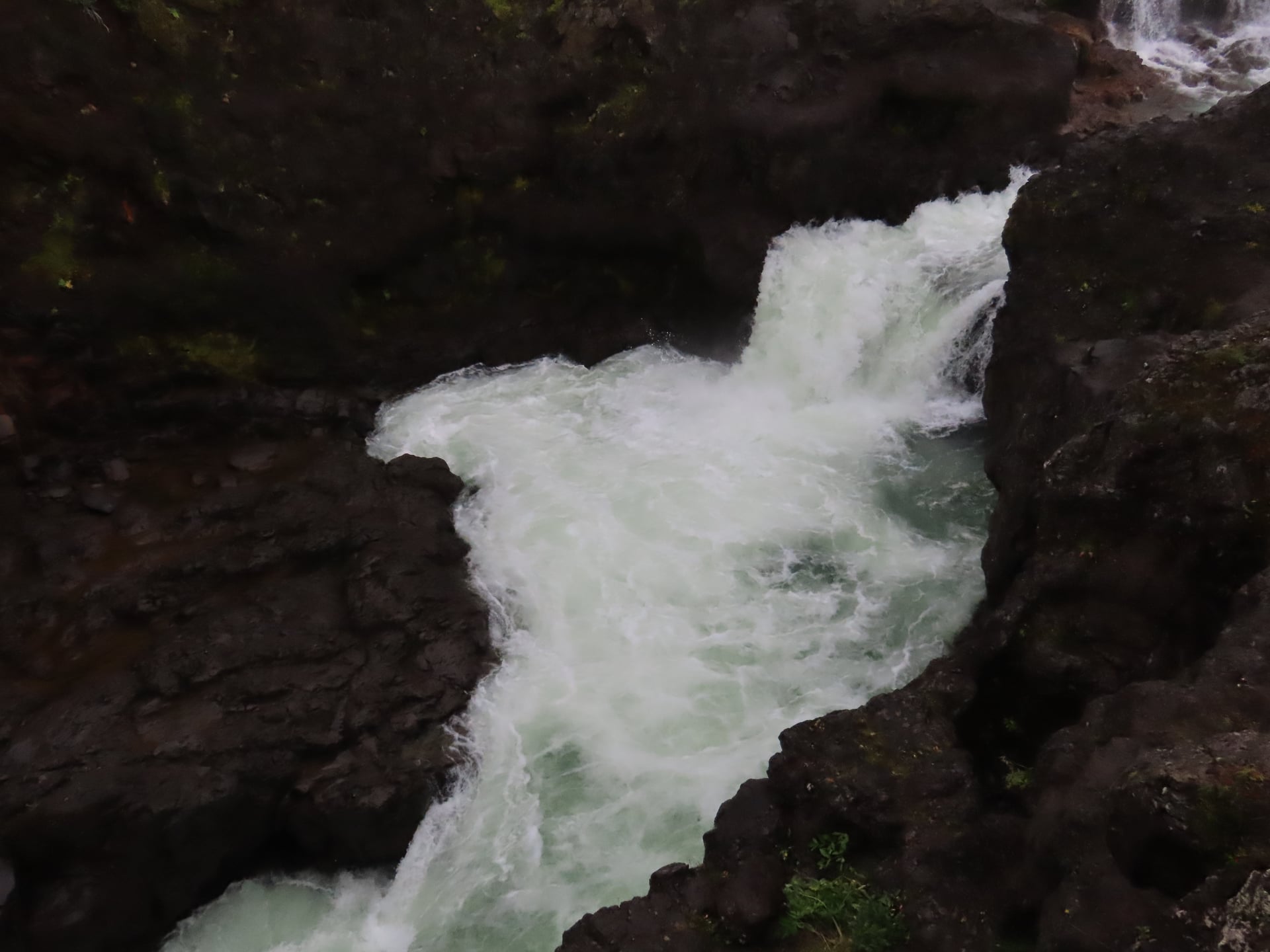
Kolugljúfur Canyon is one of those Iceland stops that many travelers first meet almost by accident. You are driving through Víðidalur, the landscape is open and rural, and then suddenly the ground breaks. A river that seemed calm a moment before folds into a dark, narrow gorge and begins dropping through a series of waterfalls. The shock of that transition is the whole point. Kolugljúfur is powerful not because it takes hours to reach or because it requires a big expedition, but because it reveals how quickly Icelandic land can change character when water finds a weakness in rock.
Visit North Iceland keeps the essentials beautifully simple. The official site says that as you drive along Víðidalur, the Víðidalsá river passes the farm Kolugil and then, just below it, plunges into the deep and rugged gorge called Kolugljúfur. The waterfalls that tumble through the canyon are called Kolufossar, in honor of the giantess Kola. That is a strong foundation for any serious article because it gives the place in the right order: first the quiet river, then the gorge, then the falls, then the folklore that people used to explain such a strange break in the landscape.
The official North Iceland tourist guide adds a detail that many visitors feel immediately but do not always put into words. It calls it a breathtaking experience to watch the peaceful Víðidalsá plunge over the edge of the rocks to create the waterfall. That contrast between peacefulness and force is what gives Kolugljúfur its particular character. This is not a canyon where drama builds from a long approach. The drama is sudden. The river seems composed, even ordinary, until it reaches the drop and becomes movement, sound, white water, and shadow all at once.
That suddenness is one reason Kolugljufur benefits from a fuller explanation instead of a two-line roadside summary. traveler questions here is more layered than it first appears. People ask whether the stop is worth it, how much time they need, whether there is a hike, and what exactly they are looking at. The fuller way to understand it is that Kolugljufur works as one of northwest Iceland's best short-form landscape experiences. It is accessible, but it does not feel trivial. It is quick to visit, but it still delivers geology, atmosphere, folklore, and route rhythm in a very concentrated form.
The folklore matters here because the place is named through story, not only through topography. Visit North Iceland and its waterfall feature both explain that the canyon and the falls are named after the giantess Kola. One official version simply honors her in the name. Another tells the local legend more vividly: Kola lived in the canyon and fished salmon from beneath the waterfalls. That kind of story feels exactly right for Kolugljúfur. The gorge is narrow, dark, and energetic enough that it invites the imagination. You do not have to believe the legend literally to understand why people kept placing a giantess here. The landscape already feels inhabited by a personality larger than human scale.
That mythic tone is balanced by the everyday reality of Víðidalur. Kolugljúfur is not hidden deep in an untouched wilderness. It sits in a farmed valley where roads, fields, and working land remain part of the scene. That matters because it gives the canyon a particularly Icelandic tension between ordinary use and sudden wonder. One minute you are in a pastoral valley. The next minute you are looking down into a deep cut of rushing water and black rock. Kolugljúfur is stronger because it does not arrive with theatrical isolation. It arrives almost inside daily life.
Visit North Iceland's article on waterfalls in the region adds a practical detail that helps define the stop well: Kolugljúfur is only about a five-minute drive from the Ring Road in Víðidalur. It also notes that a viewing platform was set up in 2018. Those two facts explain a great deal about the site's popularity. The canyon is easy enough to include on a northbound or southbound itinerary without disrupting the day, but it is also developed just enough to make the experience legible and safe for ordinary visitors. The platform is not overbuilt spectacle. It is infrastructure that allows the gorge to be appreciated without pretending the land is gentler than it is.
This accessibility shapes the emotional role Kolugljúfur often plays in a road trip. It is rarely the full destination of the day. More often it becomes the stop that wakes the day up again. On a longer drive through the northwest, that matters. A place like this can reset attention. You step out of the car, hear the water, cross to the edge, feel the scale of the drop, and suddenly the journey has texture again. Good roadside stops do more than break distance. They change the tone of travel. Kolugljúfur does that exceptionally well.
Photographically, the canyon works because it offers both structure and motion. The river funnels into the gorge, the falls break into multiple stages, and the rock walls help contain the composition. Unlike some Icelandic waterfalls that are strongest from one classic front-facing angle, Kolugljúfur is more about reading a sequence. The eye follows the water as it enters, drops, turns, and disappears deeper into the canyon. That makes the place satisfying not only for people who want one dramatic image, but also for travelers who enjoy studying how a landscape is organized.
The shape of the stop also suits families and mixed-pace travelers surprisingly well. Because there is no demanding hike required, Kolugljúfur can work for people who want real scenic reward without committing to a long trail. At the same time, the place does not feel diluted or over-managed. It still carries edge, depth, and the slight unease that good canyons should have. In Iceland, accessibility often risks turning dramatic landscapes into pure convenience. Kolugljúfur mostly avoids that problem. It remains impressive even while being easy to reach.
That said, the place is not one to treat carelessly. The gorge is real, the water is strong, and the visual openness can tempt people into thinking every edge is equally stable or wise to approach. The most satisfying way to visit is not to test the place, but to let the existing viewpoint and paths do their job. The canyon is strong enough without performance. In fact, it usually lands more deeply when you stand still and let the contrast between the quiet valley and the force below settle into you.
The river itself is part of the identity too. Víðidalsá is not only scenic water; it is a salmon river with a serious presence in the valley. That helps the Kola legend feel less random. A giantess living in a gorge and catching fish from beneath the falls belongs to a place where water has long been read in practical as well as imaginative terms. Icelandic folklore often grows from landscapes people worked with closely, not from remote fantasy alone. Kolugljúfur feels like exactly that kind of site: a place where utility, danger, and story once shared the same ground.
Season changes the mood without changing the basic appeal. In summer, Kolugljúfur feels green-edged and easy to fold into a longer drive. In rain or gray weather, it becomes moodier and more severe, which arguably suits the place even better. In colder months, if conditions allow access, the canyon can feel sharper and more skeletal, the contrast between still fields and active water even more pronounced. This flexibility is part of its strength. Kolugljúfur does not depend on one narrow weather window to be worth seeing.
For itinerary-building, it pairs naturally with other northwest Iceland stops such as Hvítserkur, Borgarvirki, or a broader Vatnsnes and Húnaþing route. It also works beautifully as a pause between larger regions, especially for travelers moving between Reykjavík, the northwest, and North Iceland. That in-between role should not make it sound secondary. Some places become memorable precisely because they hold the middle of a journey so well. Kolugljúfur is one of them. It reminds you that Iceland can still surprise you in the margins between bigger names.
Kolugljufur benefits from a fuller explanation because it is often undersold as just a quick canyon stop near the Ring Road. The stronger truth is that it is one of the best short detours in northwest Iceland for travelers who want a canyon, waterfalls, local legend, and the feeling of discovering something genuinely dramatic without a major time cost. The stop is efficient, but it is not shallow.
What often stays with people after Kolugljúfur is not only the image of the falls, but the speed of the emotional shift. You arrive in open country and leave carrying a much darker, louder, more storied impression than the valley first promised. That is the canyon's gift. Kolugljúfur proves that in Iceland, even a brief stop can open into geology, folklore, and feeling all at once.