Iceland Travel Guides
Litlanesfoss: Basalt Columns, Water, and the Precision of East Iceland
A fuller private guide to Litlanesfoss, with its organ-pipe basalt columns, Fljótsdalur setting, halfway-to-Hengifoss role, and the reason this East Iceland waterfall feels so architecturally precise.
GlaciGo Iceland / May 2026 / 10 min read
Litlanesfoss has a built-in disadvantage in Icelandic travel writing: it lives on the way to a more famous waterfall. That single fact causes many people to treat it as a bonus stop rather than a destination with its own character. But Litlanesfoss is one of those places that becomes richer the slower you look at it. Hengifoss may dominate the skyline farther up the gorge, yet Litlanesfoss is often the moment when the walk first turns from a pleasant uphill route into something memorable. The waterfall is not especially tall by Icelandic standards. What gives it force is the way it is held by stone.
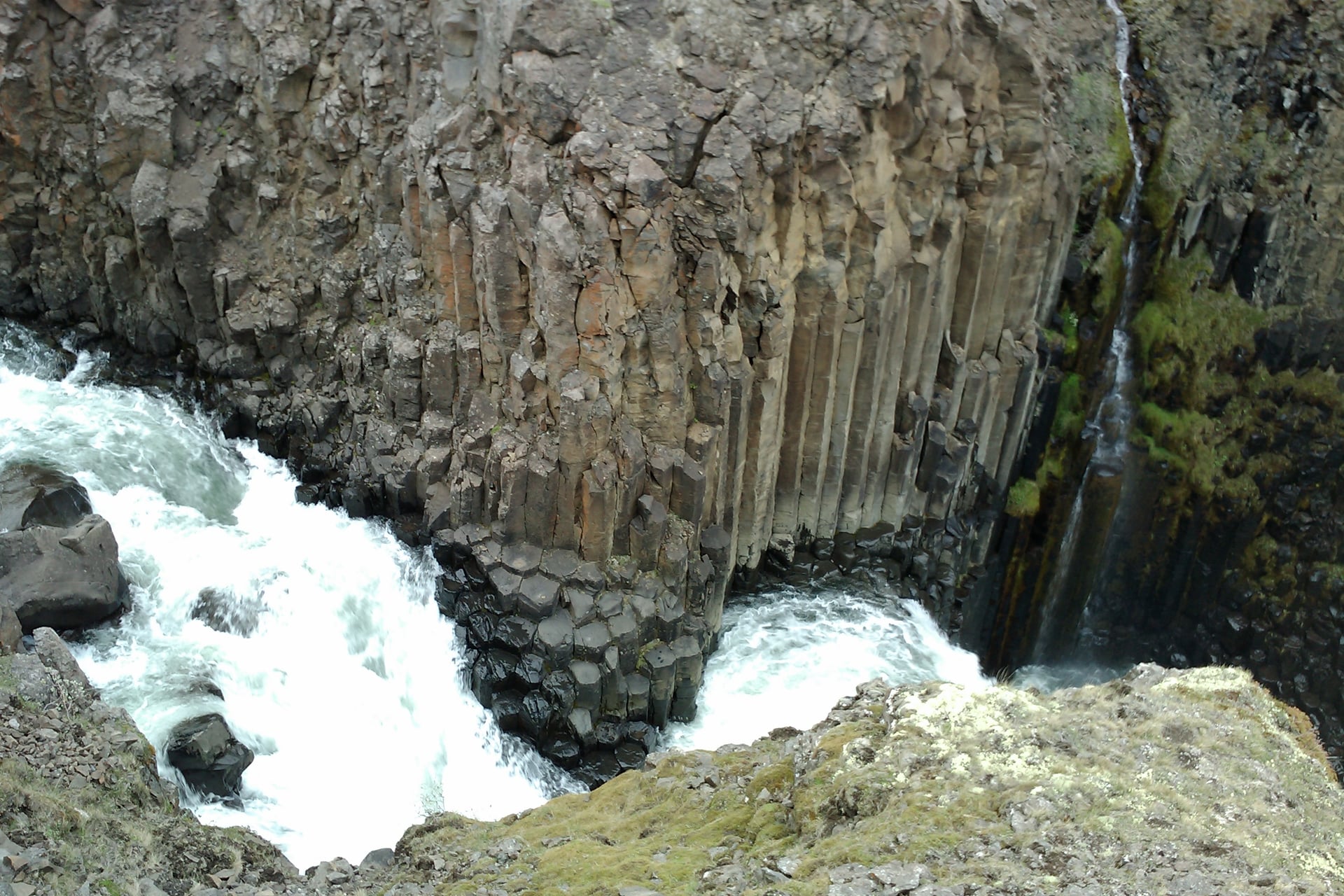
Visit Austurland describes Litlanesfoss as being about 25 to 30 meters high and surrounded by an exceptionally beautiful columnar basalt formation with unusually tall columns. That description is accurate, but in person the effect is even more architectural than it sounds. The basalt does not just frame the waterfall. It gathers around it with a kind of disciplined verticality that makes the whole scene feel composed. The official comparison to a choir or to organ pipes is easy to understand once you arrive. It is one of the few tourism metaphors in Iceland that does not feel forced. The columns really do suggest a stone instrument, as if the cliff had arranged itself around sound.
That sense of proportion is one reason Litlanesfoss deserves to stand on its own in a blog collection like this. Hengifoss is larger, louder in photographs, and easier to reduce to a headline. Litlanesfoss is more intimate. It asks for attention at closer range. The water, the gorge, the basalt, and the short descent toward the edge create a more contained experience. Instead of looking up at grandeur from a distance, you begin reading texture, rhythm, and structure. For many travelers, that makes Litlanesfoss more emotionally precise than the taller waterfall above.
Visit Austurland also notes that Litlanesfoss lies roughly halfway up the hillside on the route toward Hengifoss. That matters not only for logistics but for storytelling. The walk changes shape because of Litlanesfoss. You start with the practical rhythm of leaving the parking area and gaining elevation. Then the gorge begins to tighten, the views back toward Fljótsdalur open, and suddenly the basalt formation announces itself. The hike becomes less about reaching the end and more about moving through a sequence. Litlanesfoss acts like a threshold inside that sequence. It teaches you how to look before the red-banded drama of Hengifoss takes over.
The geology is a major part of the appeal. East Iceland holds some of the most readable basalt landscapes in the country, and Litlanesfoss is one of the clearest introductions to columnar form. When lava cools, contraction can create these polygonal columns, and at Litlanesfoss they rise around the gorge with unusual height and elegance. Visit Austurland's Hengifossárgil description adds another useful layer by naming Litlanesfoss as Stuðlabergsfoss as well, a name that points directly toward the basalt itself. That alternate name matters because it reveals what earlier observers thought was most defining here. The waterfall is inseparable from the stone columns that make it distinct.
This is also why Litlanesfoss photographs so differently from many other Icelandic waterfalls. With places like Skógafoss or Seljalandsfoss, the water tends to dominate the image. At Litlanesfoss the rock is an equal partner. The eye moves between falling water and vertical basalt lines, between motion and stillness. Even when the flow is modest, the composition stays strong because the cliff already holds so much visual authority. That makes Litlanesfoss especially satisfying in person for travelers who like places where geology does not sit quietly in the background but actively shapes the mood.
The larger Fljótsdalur setting deepens the experience. Visit Austurland's regional materials describe the valley as one of East Iceland's most rewarding cultural and natural landscapes, tied to Lagarfljót, Hallormsstaðaskógur, Skriðuklaustur, and the wider Ring of Riverdale route. Litlanesfoss belongs to that fuller East Iceland world. It is not an isolated scenic trick beside the road. It is part of a valley where waterfalls, forests, literary sites, old farms, and the long local memory of the region all lean into one another. That context gives the hike more depth than a simple waterfall stop.
Even the approach contains quiet historical texture. Visit Austurland notes the remnants of the Hengifossá corral near the mouth of the gorge, once used for sheep gathering until around 1900. That detail may seem small, but it changes how the landscape reads. The gorge is not only a place of spectacle. It has also been worked, crossed, and known through seasonal use. Old Icelandic landscapes are often richest when beauty and labor remain visible in the same frame. Litlanesfoss benefits from that kind of setting. The hike carries not only sightseers, but also the after-image of earlier practical movement through the valley.
One of the best things about Litlanesfoss is that it rewards a slower pace without demanding an extreme effort. The official trail information from Visit Austurland explains that the hike to Hengifoss is well marked, around 5 kilometers round trip, and generally takes 40 to 60 minutes each way to the upper waterfall. Litlanesfoss comes much sooner, which means it offers a substantial experience even for travelers who do not want the whole climb or who discover that weather, time, or knees are negotiating terms. There is something generous about that. Litlanesfoss gives a real sense of arrival before the full hike is over.
In practical terms, it is also a place where a little caution improves the visit. Official guidance notes that the gorge edges can be steep and slippery. That warning is worth keeping inside the article because Litlanesfoss invites people to move closer and angle themselves into better viewpoints. The basalt and the gorge can make the scene feel almost staged for photography, but it is still a real river corridor with wet surfaces and exposure. The most satisfying visit is usually the one that accepts the place on its own terms rather than trying to conquer every angle.
Season and weather alter the mood more than they alter the identity. On a bright day, Litlanesfoss can look almost classically sculptural, the basalt columns clean and graphic against the falling water. In cloud, the gorge takes on more depth and solemnity, and the organ-pipe comparison becomes even stronger. After rain, the rock darkens and the waterfall can feel more concentrated. In shoulder seasons, the surrounding valley can be quieter and the walk more contemplative. None of this changes the core experience. Litlanesfoss remains a place where stone gives the water its voice.
What it does change is emphasis. On a sunny summer day, people often read Litlanesfoss as beautiful and photogenic first. In rougher or softer weather, they often read it as atmospheric and strangely serious. That shift matters because some of East Iceland's best places are not trying to impress in one single emotional register. They are more flexible than that. Litlanesfoss can be elegant, severe, inviting, or almost ecclesiastical depending on the light. The landscape does not flatten into one postcard version of itself.
From a route-planning perspective, Litlanesfoss works especially well for travelers staying around Egilsstaðir or moving through the Eastfjords with one day set aside for Fljótsdalur. It pairs naturally with Hengifoss, but it also opens beautifully into a wider day that includes Hallormsstaðaskógur, Skriðuklaustur, Snæfellsstofa, or a drive around Lagarfljót. This matters because good travel articles should help people feel the rhythm of a region, not just the isolated fame of one stop. Litlanesfoss belongs to a day that gets progressively more layered the more you let East Iceland unfold instead of rush.
Litlanesfoss benefits from being explained on its own terms because traveler questions here is different from Hengifoss even when the two are physically linked. People searching for Litlanesfoss usually want to know about the basalt columns, whether it is worth stopping if they do not do the full hike, how it differs from the taller waterfall above, and why the name keeps appearing in serious East Iceland itineraries. Those are real questions, and they deserve more than a passing sentence buried in another guide.
What stays with many visitors after Litlanesfoss is often not scale but shape. The gorge narrows. The columns rise. The water threads through the center. The whole place feels briefly ordered, as if geology had decided to make one careful statement before the landscape opened again farther uphill. That is why Litlanesfoss lingers. It is not merely the smaller waterfall on the way to somewhere else. It is one of East Iceland's clearest conversations between water, basalt, and attention.