Iceland Travel Guides
Mývatn: Wetland Life, Volcanic Ground, and the Intelligence of North Iceland
A fuller private guide to Mývatn, with its shallow living lake, duck-rich wetlands, volcanic district, protected ecology, and the reason the area works as a whole landscape rather than a single stop.
GlaciGo Iceland / May 2026 / 10 min read
Mývatn is one of those Icelandic places that resists being reduced to a single attraction, and that resistance is exactly what makes it so important. Travelers often speak about 'going to Mývatn' as if they were visiting one lake or one stop on the Diamond Circle. In reality, they are entering an entire living district where shallow water, volcanic violence, birdlife, wetlands, pseudocraters, lava formations, geothermal fields, old farm landscapes, and modern tourism all continue to overlap. Mývatn is not one sight. It is a system. A serious article has to begin there, otherwise it turns one of Iceland's richest landscapes into a checklist.
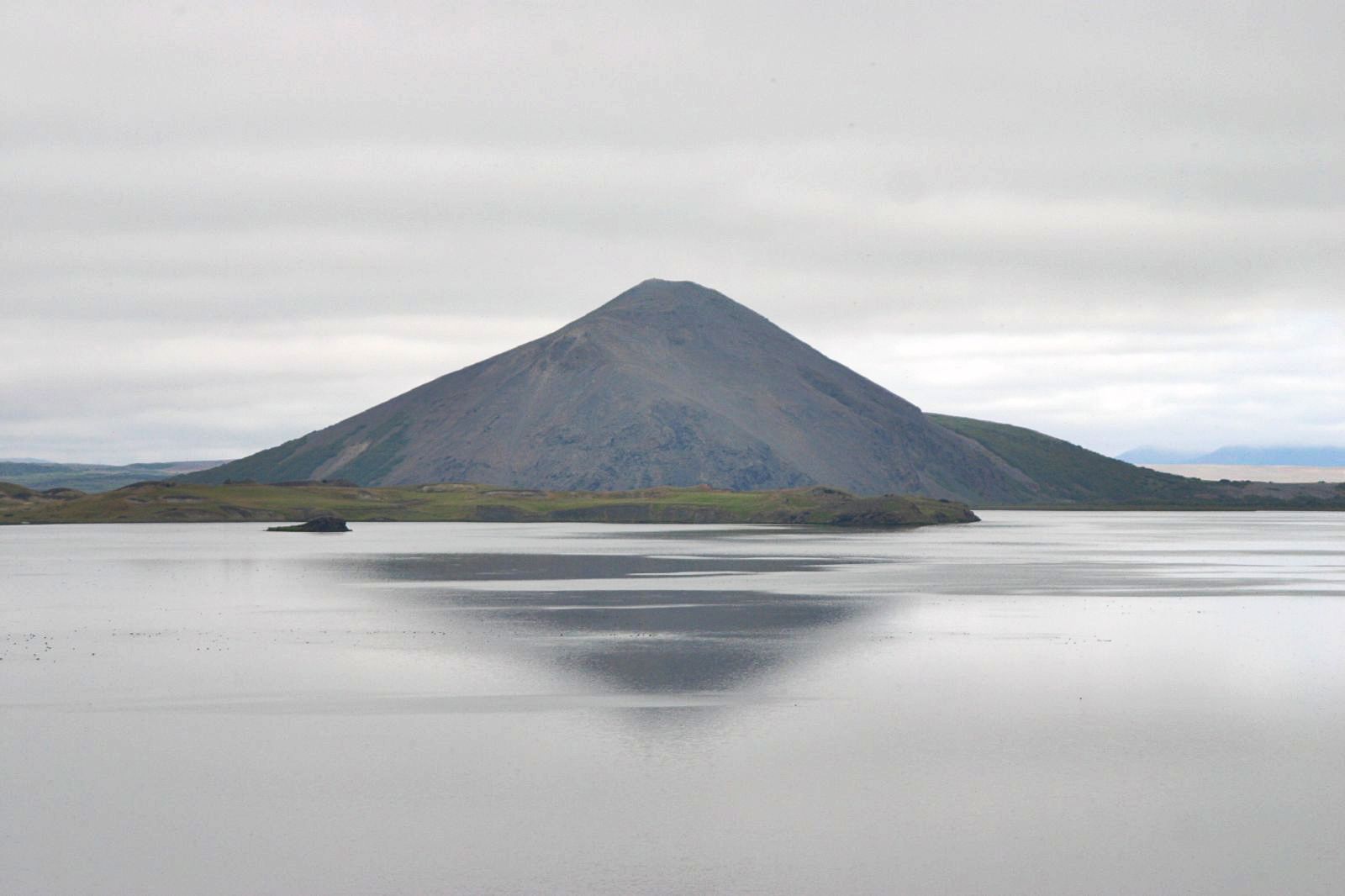
Visit North Iceland starts with the lake itself, and that is the right grounding. The official text notes that Mývatn is Iceland's fourth largest lake, about 37 square kilometers in area, with many coves and inlets and around 50 islands and islets. That form matters. Mývatn is not a clean, simple oval of water. It is broken, indented, and intricate, which means that even before you arrive at questions of geology or wildlife, the lake already feels like a place of variation. It is visually restless in a quiet way. Shoreline, light, and plant life keep changing as you move around it.
The official environmental description goes deeper. Umhverfisstofnun explains that Mývatn is extremely shallow, averaging only about 2.5 meters in depth and naturally reaching around 4 meters at its deepest. That shallowness is not a minor technical fact. It helps explain the whole ecology of the place. Because sunlight reaches the lakebed so widely, biological productivity becomes unusually high. Visit North Iceland notes the abundance of freshwater vegetation and diatoms, while fish such as Arctic char move among the plants and islets. In other words, Mývatn is not only picturesque water. It is active habitat from top to bottom.
This ecological richness is central to the lake's identity. Visit North Iceland emphasizes that, in summer, more species of duck gather around Mývatn than anywhere else in the world. Umhverfisstofnun reinforces the point by noting the varied birdlife and the global importance of the wetlands. This is one of the reasons the district cannot be understood only through volcanic drama. Mývatn is famous because life and geology coexist here in unusually dense form. The name of the lake itself comes from the midges, a reminder that even the insects belong to the story. Mývatn is not a polished scenic lake designed for human admiration. It is a living wetland first, and human travel enters that reality rather than replacing it.
Protection therefore matters. Umhverfisstofnun states that Lake Mývatn and the Laxá river region are protected by law, with the objective of conserving nature according to the principles of sustainable development and ensuring that ecological limits are not endangered. The area is also listed as internationally important wetlands under the Ramsar Convention. This is not just formal status. It is a clue to how carefully the district should be read. Mývatn is one of the places in Iceland where tourism, science, farming, and conservation are all forced into close conversation because the landscape is both alluring and ecologically sensitive.
At the same time, Mývatn is a volcanic district of exceptional intensity. Umhverfisstofnun describes the landscape as unique and formed by strong volcanic activity. Visit North Iceland and Visit Mývatn fill in the lived details: pseudocraters at Skútustaðir, the vast explosion crater of Hverfjall, the lava labyrinths of Dimmuborgir, Grjótagjá, and the geothermal area by Námafjall and Hverir. These are not side excursions detached from the lake. They are the surrounding expressions of the same unstable geological environment. Mývatn works because softness and violence remain so near each other here: ducks and steam, wetland and black lava, still water and eruption memory.
The pseudocraters at Skútustaðir are a good example of how Mývatn teaches visitors to see more precisely. Visit North Iceland explains that they formed when boiling lava flowed over wetlands and caused gas explosions. That origin matters because it reveals that some of the most graceful landforms around the lake are actually records of violent contact between lava and waterlogged ground. Mývatn repeatedly does this: it turns processes that sound brutal into forms that look almost gentle from a distance. The landscape's beauty is real, but it is never naive.
Hverfjall shifts the tone again. Visit North Iceland describes it as a large circular explosion crater about 140 meters deep and 1,000 meters in diameter. Nearby, Dimmuborgir appears as a field of dark lava formations and cliffs scattered among low vegetation. These places are famous, but they deserve more than name recognition. Around Mývatn, volcanic features are not isolated curiosities. They keep changing the emotional scale of the district. One moment the eye is on subtle bird habitat and water plants. The next it is on black lava architecture that feels almost mythic. Few places in Iceland move between intimacy and geological drama this fluidly.
Then there is the memory of the Mývatn Fires. Visit Mývatn's description of Víti near Krafla explains that the crater was formed during the major eruption that began in 1724 and that the volcanic disturbance continued for years. Even when travelers do not go deeply into Krafla's wider geological history, the district still carries the afterimage of that activity. Mývatn is not a fossil landscape left behind by some ancient and irrelevant force. Volcanism here belongs to living historical time. That proximity makes the district feel alert. The ground has a past that is recent enough to remain imaginable.
The human side of Mývatn matters just as much as the geological one. Visit Mývatn points toward old farms, turf heritage, church sites, fishing culture, and the long-lived settlement around the lake. Laxá, flowing out of the lake, is one of Iceland's best-known fishing rivers. This helps prevent Mývatn from being read as pure wilderness. It is a cultural landscape as well as a natural one. People have lived beside this volcanic wetland not because it is easy, but because it is productive, strategic, and in its own way generous.
For tourists, one of Mývatn's greatest strengths is exactly this density. Distances between major stops are short, yet the character changes constantly. You can move from waterbird habitat to lava field, from a steaming geothermal slope to a viewing point above quiet coves, from a cave with bathing history to a more contemporary wellness stop, and still feel that the day has coherence. That coherence comes from the district itself. Mývatn is one of Iceland's best examples of a region where many different attractions genuinely belong to one landscape story rather than simply happening to sit near each other on a map.
This is also why Mývatn works so well on a private itinerary. It rewards flexibility and attention more than rigid sequence. Birdlife, wind, cloud cover, walking energy, and the desire either to linger or to move on all matter here. Some travelers respond most strongly to Höfði and the lake's inlets. Others are drawn to the craters, the steam fields, or the more austere volcanic edges. A private approach allows Mývatn to behave like a district rather than a queue of compulsory stops.
Photographically, Mývatn is one of the richest places in North Iceland because it offers not one dominant icon but an entire vocabulary. Water and islets, ducks and reeds, pseudocraters, black lava, white steam, crater rims, low summer light, and broad winter stillness all coexist within a relatively compact area. This makes it less immediately legible than some single-sight destinations, but far more rewarding for anyone willing to look longer.
Myvatn deserves a wider lens because travelers search for the lake and often discover they are really asking about an entire district. Is it about birds, volcanoes, baths, wetlands, lava forms, or North Iceland route planning? The answer is yes to all of those. Myvatn is one of Iceland's great composite landscapes, bringing ecology, protection, settlement, and volcanism into a single unusually readable region.
What stays with many visitors after Mývatn is a sense of layered intelligence in the land itself. The district feels intricate rather than monumental, alive rather than merely scenic. It does not overwhelm by one single gesture. It keeps revealing another relation: water to lava, insect to bird, crater to wetland, old farm to geothermal edge. Mývatn lingers because it teaches you that some of Iceland's deepest beauty lies not in one object, but in a whole living district thinking through many forms at once.