Iceland Travel Guides
Nauthólsvík Geothermal Beach: Golden Sand, Cold Sea, and Reykjavík's Gift for Reinvention
A fuller private guide to Nauthólsvík Geothermal Beach, with its imported golden sand, geothermal mixing lagoon, bathing culture, and the reason this Reykjavík shore is more about civic imagination than simple sunbathing.
GlaciGo Iceland / May 2026 / 9 min read
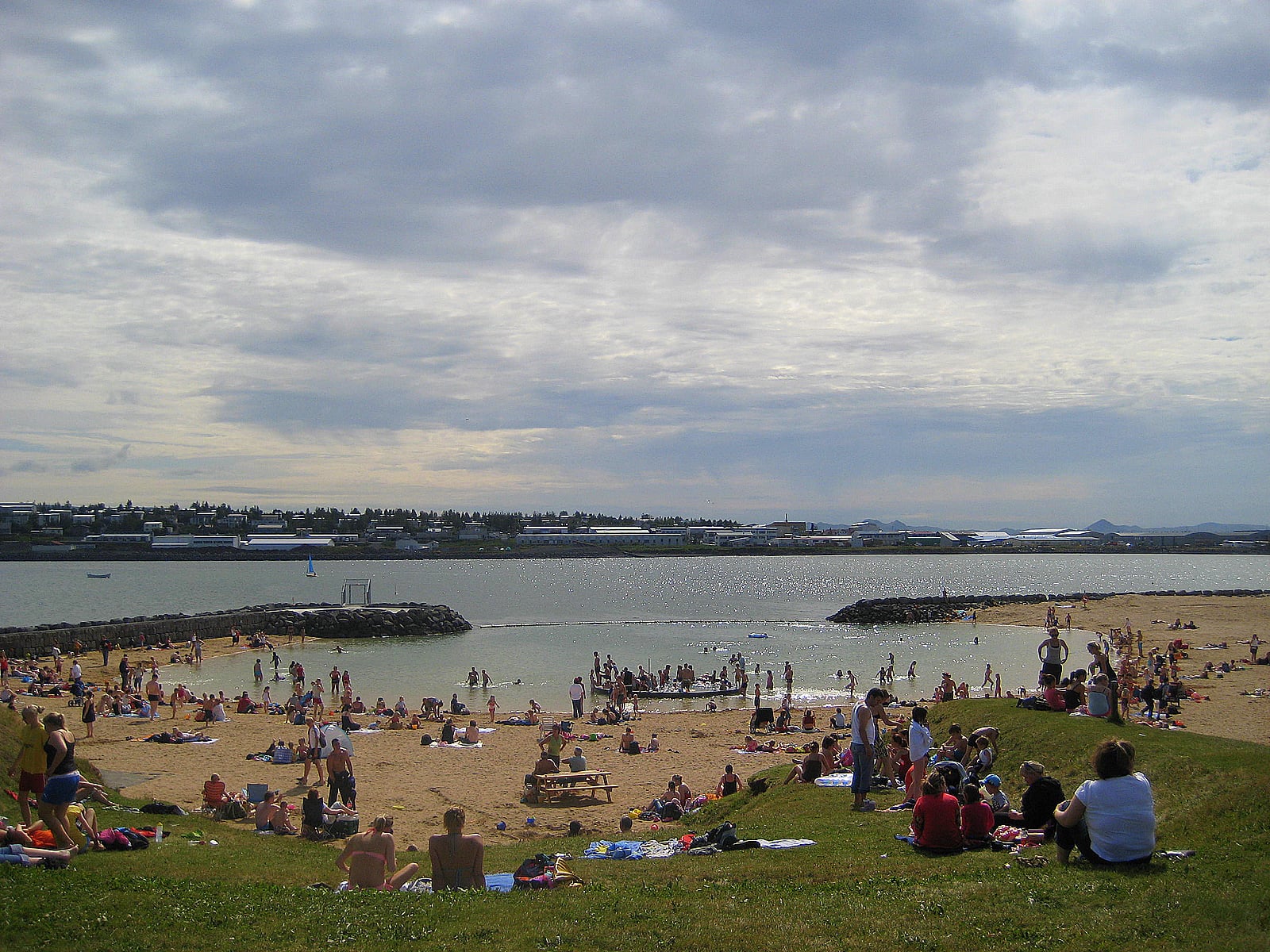
Nauthólsvík Geothermal Beach is one of the most revealing places in Reykjavík because it shows how Icelanders use warmth not only to survive a climate, but to reinvent it. On paper the idea can sound slightly improbable: a golden-sand beach in the North Atlantic, created with imported sand, protected by seawalls, and warmed by geothermal water so that people can swim, sunbathe, steam, and cold-plunge in a place where the sea itself would otherwise feel far less forgiving. In practice, the result is one of the city's most characterful outdoor spaces. A good article about Nauthólsvík should not pretend it is a tropical beach transplanted north. Its beauty lies precisely in the mixture of the artificial and the elemental.
Visit Reykjavík describes Nauthólsvík as a paradise for people who love splashing around in the ocean or sunbathing on golden sand under the midnight sun, and that description works best when held together with the facts of how the place was built. The beach was constructed by importing golden sand and building seawalls to protect the lagoon. Warm excess water is pumped into the area, producing a swimming zone that averages roughly 15 to 19 degrees Celsius in summer. Reykjavík city adds an even clearer technical explanation: hot water from the city's supply flows into two hot tubs and into the bay, which remains open to the fjord so that tides continue mixing seawater and geothermal warmth. This is not a natural hot spring hidden at the edge of the city. It is a civic invention.
That civic invention is exactly what makes Nauthólsvík so interesting. Many visitors come to Iceland expecting geothermal culture to appear mainly in remote hot springs, famous lagoons, or standard municipal pools. Nauthólsvík expands the picture. It says that geothermal energy can also become beach culture. Reykjavík did not simply accept that the sea at its edge would remain symbolically distant from everyday bathing. It intervened, carefully and imaginatively, and created a place where cold ocean, warm water, urban recreation, and the social life of summer could meet.
The golden sand matters more than it may seem. Icelandic beaches in the popular imagination are black, dramatic, and often visually severe. Nauthólsvík deliberately refuses that expectation. By importing pale sand, the city created not only a functional recreation area but a change in emotional register. The beach feels brighter, lighter, and more deliberately playful than the volcanic coasts visitors usually associate with the country. That contrast is part of why the place lingers in memory. It is unmistakably Icelandic, yet it also bends expectation.
At the same time, the Atlantic is never fully excluded. Reykjavík's own description emphasizes that the bay remains open to the fjord, which allows tides and seawater to continue shaping the experience. This is important because it keeps Nauthólsvík from becoming a sealed geothermal pool wearing a beach costume. The site remains a negotiation. Warmth and cold meet. Sea and city meet. Design and weather meet. That tension gives the place its character. You are never allowed to forget where you are.
For tourists, one of the best ways to understand Nauthólsvík is as a beach for people who enjoy contrast rather than comfort in the conventional resort sense. There are changing facilities, showers, steam baths, and hot tubs, as Visit Reykjavík notes, but the deeper pleasure comes from moving between temperatures and textures. Sand underfoot, cold sea on skin, hot tub steam, wind from the bay, bright summer air, and the sight of people treating all this as entirely normal: that combination is much more memorable than simple relaxation. Nauthólsvík is less about escaping Icelandic weather than learning how to participate in it differently.
This is where the site's bathing culture becomes especially important. Icelandic swimming and soaking culture is often discussed through public pools, but Nauthólsvík shows a neighboring value: openness to the outdoors even when warmth is partly engineered. The beach invites a slightly bolder relationship to the elements. Some people swim in the lagoon. Some use the hot tubs and steam rooms as anchor points before or after the water. Some simply stretch out on the sand on a calm day and enjoy the odd delight of being at a beach in Reykjavík without pretending they are anywhere else.
Its location also makes it stronger than a destination-only description would suggest. Nauthólsvík sits in a part of Reykjavík where shoreline, green space, and urban life come together in a way many first-time visitors do not expect. It can fit naturally with a walk around Öskjuhlíð, a visit to Perlan, or a slower south-side city day that moves away from the denser downtown core. This matters because the beach is not merely a novelty tucked in isolation. It belongs to a broader Reykjavík pattern in which nature and city life remain unusually close.
The fact that the City of Reykjavík operates both the geothermal beach and Siglunes Sailing Club also says something useful about the place. Nauthólsvík is not just a scenic fringe attraction for outsiders. It is part of the city's own recreational fabric. That makes a difference to atmosphere. You do not feel as though you have arrived at a one-note tourist site. You feel as though you have entered a local outdoor culture that happens to be remarkably photogenic and unusually generous to visitors willing to adopt its logic.
For many travelers, Nauthólsvík becomes especially meaningful on a good summer day, when the fantasy embedded in the place comes fully alive: the midnight-sun version of a northern beach, where the ocean is still the ocean but human ingenuity has made it just welcoming enough to invite play. Yet it can also be beautiful in less obviously beach-like weather. Wind, cloud, and the sight of steam rising from hot water against cooler air can make the place feel even more Icelandic. The point is not that it always behaves like a classic beach. The point is that it turns the very idea of a beach into something local.
There is also a useful honesty to preserve in the writing. Nauthólsvík is not a tropical illusion, and visitors expecting soft, uniformly warm water may misunderstand it. Even in summer the water can feel brisk, and the enjoyment comes partly from that bracing edge. The official descriptions themselves make clear that warm and cold water mix. This is not a flaw. It is the experience. People who enjoy saunas, cold plunges, sea swimming, geothermal bathing, or simply unusual urban spaces are likely to understand the appeal fastest.
Nautholsvik Geothermal Beach works because it sounds improbable and then proves very Reykjavik. Travelers ask whether the city really has a geothermal beach, whether it is for swimming, cold plunging, sunbathing, or hot tubs, and whether the place is clever or gimmicky. The answer is that Nautholsvik expresses local civic imagination: infrastructure, leisure, climate, and public bathing culture meeting in one specific cove.
What stays with many visitors after Nauthólsvík is often a refreshed idea of what a beach can be. It is not only a shore for heat-seeking escape. It can also be a designed meeting point between warm and cold, between city and bay, between ordinary recreation and slight adventure. Nauthólsvík lingers because it makes Iceland's geothermal culture visible in open air, in daylight, on sand, at the edge of the sea.