Iceland Travel Guides
Puffin Watching Borgarfjörður: Why Hafnarhólmi Feels So Easy and So Good
A fuller private guide to puffin watching in Borgarfjörður Eystri, with Hafnarhólmi access, season timing, wildlife etiquette, harbor context, and the reason this is one of Iceland's best puffin experiences.
GlaciGo Iceland / May 2026 / 11 min read
Puffin watching in Borgarfjörður Eystri is one of those rare Iceland experiences that really is as easy and rewarding as people say it is. Usually, birdwatching articles have to balance excitement with realism. The birds may be present but far away, the footing may be awkward, the cliff edge may be exposed, or the whole thing may depend on luck and patience more than a quick search result admits. At Hafnarhólmi in Borgarfjörður Eystri, the basic promise is unusually solid. This is one of the country's most accessible, well-managed, and locally cared-for puffin sites, and that makes it valuable not just for photography but for the quality of the encounter itself.
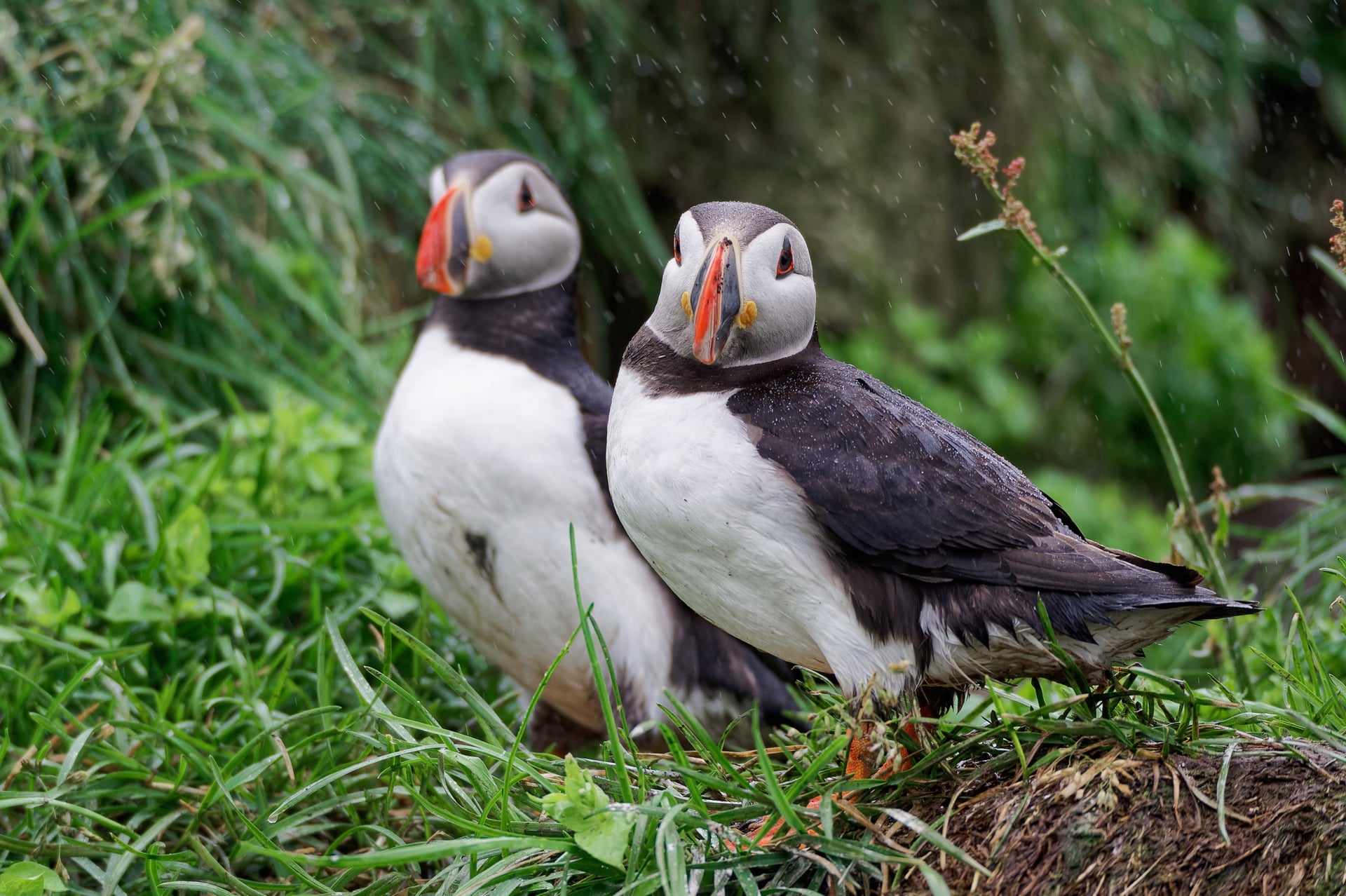
The local Borgarfjörður Eystri puffin page is direct about the reason people come. It says around 10,000 pairs of puffins nest there every summer and calls this probably the easiest and safest place to watch puffins in Iceland. That is a strong claim, but the official description explains why it is believable: there is a shelter and wooden viewing platform, and visitors can get very close without risking a fall into burrows or off a cliff. In other words, Hafnarhólmi is not simply a place where puffins happen to be nearby. It is a place where access has been designed with both people and birds in mind.
Visit Austurland reinforces the same point from a regional tourism perspective. Its Hafnarhólmi page describes the islet at the harbor in Borgarfjörður Eystri as perhaps the most accessible Atlantic puffin colony in Iceland, with birds nesting every year from roughly mid-April to the beginning of August. The local puffin page gives a slightly different upper range, saying mid-April to mid-August. Taken together, the safest way to phrase it is that the season usually begins in April and runs into August, with exact timing varying as it always does in wildlife watching. That is the kind of nuance travelers actually need. Puffins are seasonal, not guaranteed on a fixed calendar day, but Borgarfjörður Eystri is one of the least frustrating places in Iceland to try your luck.
The reason this works so well is not only the puffins themselves but the structure of the site. Hafnarhólmi sits by the marina, not at the end of a dangerous coastal scramble. Local authorities and landowners, according to the official Borgarfjörður page, have spent years improving birdwatching and recreational facilities. Visit Austurland says locals have cared for the birds and the place for decades, building it so people can enjoy the area in harmony with wildlife. That line deserves to be taken seriously. Borgarfjörður Eystri is not a place where tourism simply arrived and claimed the birds. It is a place where the community has tried to build a workable relationship between access, pride, and protection.
That community care changes the emotional tone of the experience. The AECO community guidelines for Borgarfjörður Eystri emphasize moving quietly in the conservation area, staying on the paths, and remembering that the port is a place of work as well as a place of beauty. Those instructions are practical, but they also quietly teach you how to be a good guest. Puffin watching here is not meant to feel extractive. You are not supposed to storm in, take the photograph, and leave as if the birds and harbor existed only for you. The site works best when you accept that Hafnarhólmi is both a colony and a community edge.
That is one reason Hafnarhólmi is such a good place for first-time puffin watchers. You do not need deep birding experience to enjoy it. You do not need to decipher distant dots with binoculars just to confirm that yes, there are probably puffins out there somewhere. The local site says you can get very close views of puffins, fulmars, kittiwakes, and common eiders. The platform makes the visual and emotional reward immediate. Children, non-birders, serious photographers, and tired Ring Road travelers can all understand the place quickly. Good accessibility does not flatten the experience here; it opens it up.
At the same time, this is not only a convenience story. Borgarfjörður Eystri gives puffin watching a better landscape than many easier wildlife stops. The harbor sits inside a fjord ringed by mountains, and even before or after the birds, the setting itself is memorable. If you arrive in shifting East Iceland light, with cloud moving over the ridges and the village of Bakkagerði behind you, Hafnarhólmi does not feel like an isolated platform. It feels like one expression of the whole fjord. That matters. Wildlife experiences stay with people longer when the surrounding place is strong enough to hold them.
The village context also adds depth that many puffin sites do not have. In Borgarfjörður Eystri, the viewing area belongs to a living small harbor where fishing, tourism, and local routines coexist. AECO explicitly reminds visitors that the port is a working place. That is useful not only as etiquette but as interpretation. You are not looking at wildlife from a detached viewing theater. You are standing at a harbor that still belongs to local work, local knowledge, and local timing. Puffin watching becomes part of village life rather than something staged far away from it.
Timing matters, though not in the simplistic internet way of pretending there is one perfect hour for everyone. The official sources are strongest on season rather than exact time of day, and that is the honest place to stay. In practice, weather, light, and your own pace matter as much as chasing a magic minute. The better advice is to allow enough time to stand quietly, notice how the birds move, watch them gather and depart, and let the colony become more than a quick photographic hit. Hafnarhólmi is accessible enough that you can afford patience.
Ethics matter too, and this is one of the places where they can be explained simply. Stay on the platforms and paths. Move quietly. Do not try to step closer through nesting ground. Do not treat the birds as props. The local material and AECO guidance both point in that direction, and the logic is clear: the whole reason this place is so easy to enjoy is that people before you have respected it enough for the system to keep working. Good puffin watching in Borgarfjörður Eystri depends on restraint more than bravado.
The colony also makes a useful contrast with other puffin sites in Iceland. Dyrhólaey, for example, gives you dramatic cliffs and a broader South Coast setting, but the experience can be more about distance, exposure, and combining puffins with scenery. Hafnarhólmi is more concentrated. It is about closeness, clarity, and comfort. You can watch details of behavior more easily. You can spend less energy on footing and more on attention. That difference is worth naming because many travelers are not asking only where puffins exist. They are asking where they can enjoy them well.
Photography at Hafnarhólmi is especially satisfying for this reason. Because the birds are close and the viewing structures are stable, you do not need the most heroic lens or the most intense fieldcraft to come away happy. But the place also stays interesting for people who know birds well. Close access does not eliminate variation. Light changes feather detail, background water changes mood, and the movement of puffins between air, rock, and burrow keeps the scene alive. The colony works for beginners because it is easy, and for experienced observers because it is active.
One of the more interesting official details on the local puffin page is that the population size and species distribution at Hafnarhólmi have been well documented. It also notes that all species are protected by law during breeding season. That matters because it keeps the article grounded in more than enthusiasm. This is not a vague tourist attraction loosely associated with birds. It is a monitored breeding site with real ecological significance. Even the mention of eider down harvesting as a long-standing sustainable Icelandic practice widens the frame a little, reminding visitors that birdlife here sits inside a long human history, not outside it.
From an itinerary perspective, puffin watching in Borgarfjörður Eystri works beautifully as either the main reason for the detour or the emotional centerpiece of a broader village stop. Some travelers come for the birds and then discover Álfaborg, harbor calm, and East Iceland hospitality. Others come for the village and find that Hafnarhólmi becomes the moment they remember most vividly. Either way, the colony fits the district rather than overshadowing it. That is part of what makes the experience feel balanced instead of overcommercialized.
this topic benefits from being explained on its own terms even though Borgarfjordur Eystri already merits a broader destination guide. traveler questions here is specific. People want to know whether Borgarfjordur is truly one of the best places in Iceland to see puffins, when the birds are usually present, how close the viewing really is, and whether the site is good for non-birders, families, or photographers. Those are not the same questions as a general village guide. The fuller way to understand it is yes: for pure land-based puffin watching, Borgarfjordur Eystri is one of Iceland's strongest choices because access, stewardship, and atmosphere all line up unusually well.
What stays with many visitors after Hafnarhólmi is often not only the birds themselves but the ease of the whole experience. You arrive without drama. You stand in a place that has been prepared with care. The puffins are close enough to feel real rather than symbolic. The village remains visible behind the wildlife, and the mountains remain visible behind the village. Puffin watching in Borgarfjörður Eystri lingers because it feels generous. The birds are there, the landscape is there, and the community has made it possible to meet both without forcing either one.