Iceland Travel Guides
Selatangar: Ruins, Lava Shore, and the Memory of Work
A fuller private guide to Selatangar, with its abandoned fishing-station history, lava-coast setting, ghost-story atmosphere, and why these ruins carry so much of Reykjanes' human memory.
GlaciGo Iceland / May 2026 / 10 min read
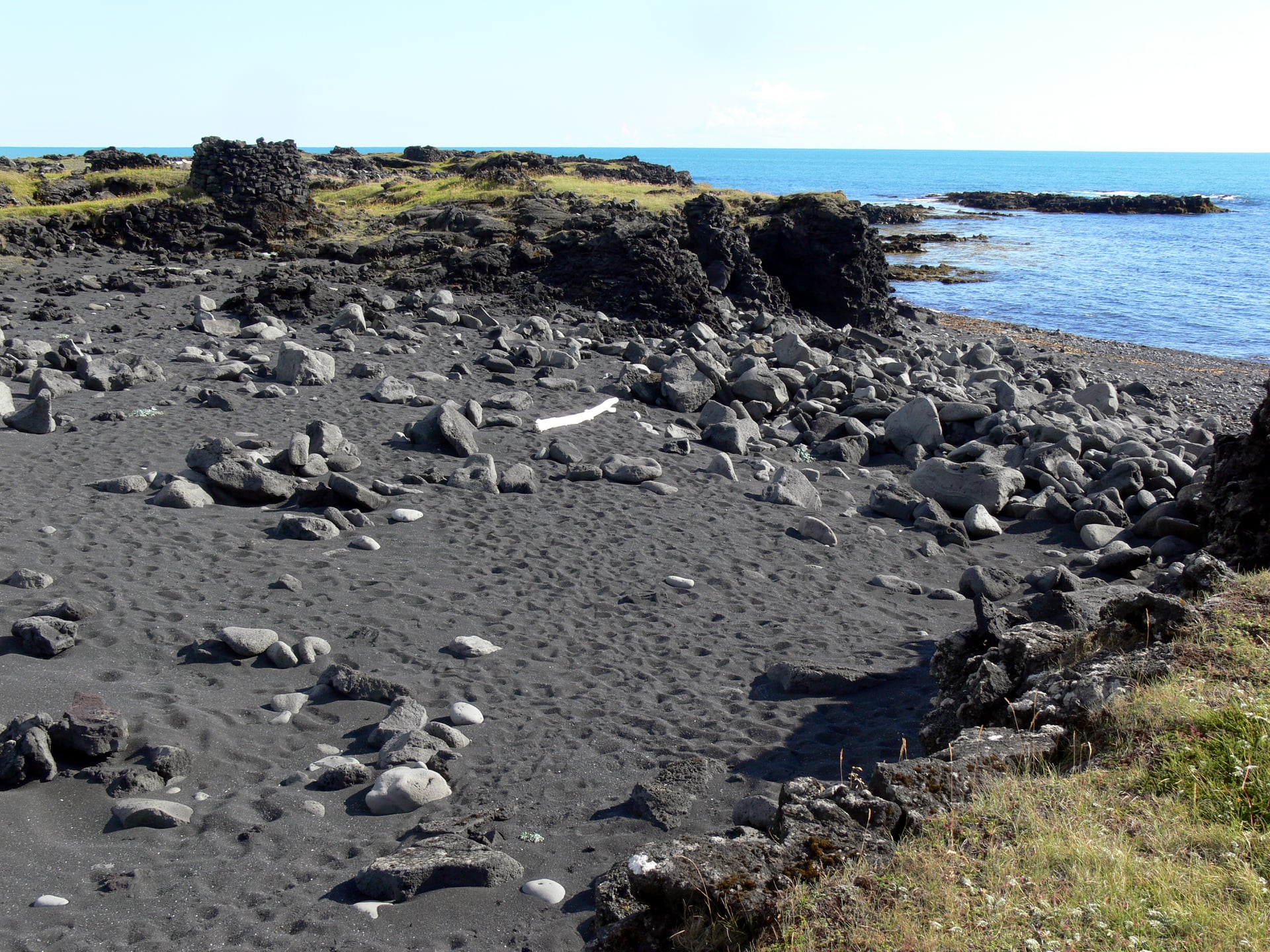
Selatangar is one of those Icelandic places where the coastline seems to remember labor long after people have gone. At first glance you see lava, low sea-battered ground, broken walls, and the hard Atlantic edge of Reykjanes. But the site does not read like a purely natural ruin. It feels inhabited by absence. The fishing station is gone, the seasonal life that once organized the place is gone, and yet the remains still lie strongly enough in the lava landscape that the mind reconstructs effort almost automatically. That is why Selatangar deserves more than a passing mention in a broader Reykjanes article. It is one of the peninsula's best places for understanding how work, danger, memory, and folklore share the same shore.
Visit Reykjanes describes Selatangar very clearly as a large fishing outfit between Grindavík and Krýsuvík, abolished after 1880, with extensive ruins of dwellings and other houses still highly visible in the landscape. That one paragraph already gives the place its essential frame: this was not a random isolated hut but a substantial seasonal coastal station built around fishing. The article also notes that the ruins are inviolate, which matters. Selatangar is not just atmospheric old stone. It is protected cultural memory in a very exposed setting.
The same official description makes the landscape part of the story rather than a backdrop. It notes low mountains and lava fields around the site, and also mentions the neighboring Katlahraun lava, which flowed into the sea about 2,000 years ago and created a large circular lava pond when the shore suddenly dammed it. This geological context is important because Selatangar sits in a place that was already difficult and strongly formed before people ever used it as a fishing station. The human settlement was temporary and practical; the lava coast was older and harder. The tension between those two time scales gives the site much of its power.
There is also a very specific Reykjanes logic to Selatangar's location. This is not a friendly harbor town or a gently shelving beach where fishing culture drifted naturally into picturesque ruin. It is a rough lava shore where people came because fish and coastal opportunity justified the hardship. That distinction matters. Selatangar preserves not comfort but necessity. The remains make most sense when you imagine work being done under conditions that were often physically unforgiving.
This is one reason the site feels so different from prettier or more obviously scenic ruins elsewhere in Iceland. At Selatangar, the ruins are not softened by meadows, birch growth, or village continuity. They lie out in the lava as if still testing whether human presence there was ever sustainable. That visual harshness is honest. It makes the place more moving, not less. The fishing station did not disappear because time made it quaint. It disappeared because a way of using this coast ended.
Visit Reykjanes also preserves one of the details that has helped Selatangar stay alive in popular imagination: in the latter part of the nineteenth century, ghosts were said to haunt the settlement. This should not be treated as cheap spookiness. It fits the place too well. Coastal labor sites abandoned in hard landscapes often gather stories because absence itself becomes difficult to narrate. Once the workers stop coming, the mind supplies other presences. In Iceland, where stories of hauntings, hidden beings, and landscape memory have long been part of cultural texture, Selatangar almost invites that interpretive layer.
What matters is not whether a reader believes the ghost tales literally. What matters is that the site earned them. Selatangar is remote enough, ruined enough, and physically stark enough that folklore attaches naturally. A haunted reputation is simply one way a community expresses the afterlife of labor. The ghosts at Selatangar are really the persistence of the place's unfinished emotional charge. Too much happened there for the coast to feel empty once the people were gone.
The abundance of driftwood mentioned by Visit Reykjanes adds another subtle human detail. Driftwood was once plentiful there, though less so today. That small fact helps the station become real. It reminds us that old fishing outposts were not only about boats and fish. They were about materials, fuel, weather, and scraping together what a coast could provide. Selatangar was part of a larger economy of coastal resourcefulness, and the ruins make more sense when read through that practical history.
Access should also be written honestly. Visit Reykjanes notes that a track for 4WD vehicles goes down to the ruins from the road toward Ísólfsskáli. That fits the character of the place. Selatangar is not difficult because it is hidden behind hype. It is difficult because the lava coast itself keeps a certain rough dignity. Even arriving there feels a little like shifting out of the smoother modern peninsula and into an older, more abrasive one.
Photographically, Selatangar can be misunderstood if approached only as a ruin site. The strongest images usually include the tension between stone remains and lava surface, or between human walls and the sea's open force. This is not a place where the ruins are enough on their own. The point is precisely that they are not alone. They are caught between black rock, surf, weather, and the feeling of a coastline that never really wanted to become domestic. That is what gives the site its unusual visual seriousness.
For private itineraries, Selatangar works especially well when paired with nearby Reykjanes sites that show other sides of the peninsula: Brimketill for sea-force, Krýsuvík for geothermal color, Gunnuhver for steam and folklore, or Hafnaberg for bird-cliff exposure. Selatangar brings a different layer altogether: lived history. It reminds the traveler that Reykjanes is not only volcanic and scenic but worked, inhabited, and remembered through difficult coastal economies.
Compared with something like the Sólheimasandur plane wreck, Selatangar carries a deeper historical and cultural weight. Compared with Gígjagjá, it is less about one striking visual form and more about the persistence of a whole human site. Compared with Grindavík, it is not a continuing community but a coastal remnant of older maritime labor. These differences matter because they protect the article from becoming generic ruin-writing. Selatangar is not beautiful because it is broken. It is compelling because the break between use and abandonment is still visible.
Selatangar is strongest when it is allowed to remain layered. Some visitors arrive for haunted-Iceland atmosphere, others for fishing history, ruins, lava walks, or Reykjanes route planning. The place can hold all of that without becoming a ghost-tour clich?. Its real value is the way geology, coastal labor, ruin aesthetics, and folklore gather into one of the peninsula's most memorable historical landscapes.
What stays with Selatangar is not one ruin wall or one ghost story. It is the whole feeling of a place where people once worked very hard at the edge of a lava sea and then left, while the coast kept the outline of their effort. Reykjanes has many dramatic sites. Few feel this inhabited by the memory of labor.