Iceland Travel Guides
Skútustaðagígar: Quiet Cones, Violent Origins, and the Logic of Mývatn
A fuller private guide to Skútustaðagígar, with their pseudocrater origin, wetland-lava history, protected status, and the reason these graceful forms matter so much in understanding Mývatn.
GlaciGo Iceland / May 2026 / 10 min read
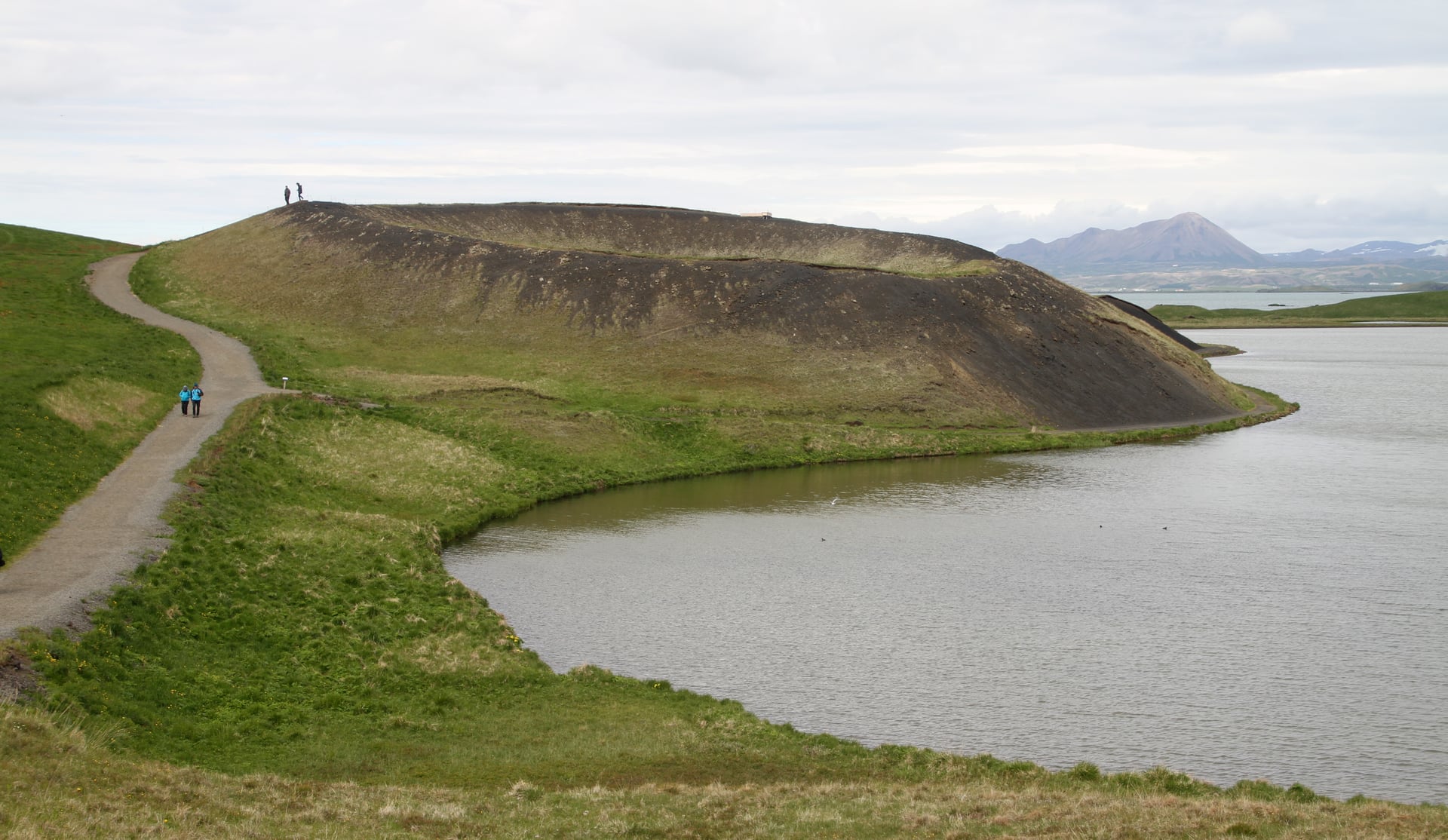
Skútustaðagígar are one of the clearest examples in Iceland of how violent geological processes can leave behind landforms that look calm, elegant, and almost easy to misunderstand. At first glance, many visitors simply see graceful crater-like humps along the southern shore of Mývatn. The shapes are pleasing, the paths are approachable, and the light across the lake can make the whole area feel mild. But these are not ordinary volcanic craters. They are pseudocraters, or rootless cones, and the distinction matters. Skútustaðagígar are among the best places in North Iceland to learn how lava and wetlands once collided here so forcefully that the landscape still carries the memory.
Visit North Iceland's official descriptions are helpful because they begin with the essential fact. The Skútustaðagígar were formed when boiling lava flowed over wetlands and caused steam or gas explosions. Visit Mývatn says essentially the same thing and places the pseudocraters among the district's signature stops. That explanation matters because it changes the whole emotional reading of the site. These rounded forms may look gentle now, but they began as records of sudden contact between fire and waterlogged ground. Mývatn repeatedly teaches this lesson: softness in the present often rests on extreme contact in the past.
The Environment Agency of Iceland adds a crucial conservation frame. Its official page notes that Skútustaðagígar were protected in 1973 because of their unique and fragile geological remains. That wording is important. The area is not protected because it is merely pretty. It is protected because it holds rare evidence of a specific volcanic process in an unusually readable way. The pseudocraters are scientific as well as scenic. They help explain how Mývatn became the district it is today, where lava, shallow water, wetlands, and later birdlife all remain tied together.
This is why Skutustadagigar deserve their own treatment rather than only a paragraph inside a general Myvatn guide. traveler questions here is often different. People want to know what pseudocraters actually are, whether the site is worth stopping for if they are already seeing bigger and more dramatic stops nearby, and what makes these mounded craters so important in the broader volcanic story of North Iceland. The answer is that Skutustadagigar matter because they are one of the most legible places where Myvatn's identity as a lava-wetland district can be seen in form.
The setting deepens that explanation beautifully. Skútustaðagígar stand near the lake, and the official routes from Visit North Iceland frame them not only as geological objects but as a walking experience connected to views over water, wetlands, and bird habitat. That matters because pseudocraters are strongest when read in context. If you removed them from Mývatn, they would still be interesting. But here, beside the lake they helped shape, they become more than examples. They become evidence in their original setting. You look at the low cones, then at the water and wetlands beyond, and the district begins to explain itself.
There is also something quietly generous about how accessible the site is. Visit North Iceland offers hiking information centered on the crater area, and the trails make Skútustaðagígar easy to enter without turning them into a passive drive-by landmark. This balance suits the place well. The cones are approachable enough for many kinds of travelers, yet they still ask for a little movement and curiosity. You walk around them rather than merely naming them. That movement matters, because pseudocraters reveal their form better as you circle and compare.
Compared with some of the more severe volcanic stops in the Mývatn district, Skútustaðagígar operate in a more reflective register. Hverir strips the landscape to chemistry and steam. Leirhnjúkur gives you recent lava and the unease of a surface still close to heat. Dimmuborgir turns drained lava into architecture and folklore. Skútustaðagígar are quieter. Their force lies in explanation, proportion, and relation to the lake. They do not overwhelm the senses. They train the eye.
That training is especially valuable for travelers who think they are not naturally drawn to geology. Skútustaðagígar make volcanic process readable through simple form. Once you understand that these are not eruption vents but explosion features created where lava crossed wet ground, the wider Mývatn district starts to make more sense. The region stops being a collection of unrelated wonders and begins to feel systemic. This is one of the most important roles that good smaller sites play inside great landscapes. They teach you how to see the larger whole.
Birdlife and wetland atmosphere keep the pseudocraters from becoming a dry lesson. Mývatn is globally important for ducks and wetland ecology, and around Skútustaðagígar that living context remains part of the experience. The low vegetation, the nearby water, the broad sky, and the possibility of birds on or above the lake mean the site rarely feels like a bare volcanic classroom. Instead it feels like one of those very Icelandic places where ecology and geology stand close enough together that neither can be interpreted honestly without the other.
Photographically, Skútustaðagígar reward patience more than spectacle. Their shapes are subtle and can look flatter in hurried images than they do in person. The best views often come when the cones are read against the water and against one another, rather than isolated from context. Light also matters. In low or side light, the forms become much clearer and more sculptural. In flatter midday conditions, the broader relationship between crater, wetland, and lake may tell the stronger story. This is one reason the site is often more satisfying in person than on a screen. The intelligence of the place unfolds through relation.
The conservation story adds another layer of respect. The Environment Agency's material makes clear that the pseudocraters are fragile and protected. That should shape how the article speaks. Skútustaðagígar are not just little hills to scramble over thoughtlessly. They are a delicate geological archive. Following marked paths is not only a rule. It is part of preserving the exact forms people have come to understand. One of the quiet strengths of the site is that it can remain accessible while still asking visitors to behave with restraint.
This restraint also keeps the experience aligned with the older rhythm of the district. Mývatn has always been a place where water, land use, birds, and volcanic history had to be read together. Skútustaðagígar embody that rhythm. They are beautiful, but their beauty is not decorative. It comes from process, from relation, and from the way the cones now sit peacefully in a landscape once shaped by explosive contact. That gives them a calm dignity that many larger, louder landmarks do not possess.
From an itinerary perspective, Skútustaðagígar work particularly well early in a Mývatn day or as part of a slower circuit around the lake. They help set the intellectual tone of the region without demanding the most physical energy. For families, first-time visitors, photographers, and travelers who want to understand rather than only react, they are one of the smartest stops in the district. The site makes later places like Hverir, Krafla, and Dimmuborgir more meaningful because you have already begun learning the language of contact and transformation that defines Mývatn.
the pseudocraters deserve a fuller guide because too much online writing treats them as an easy checkbox near the road and does not explain why they are special. What people actually need to know is whether they are distinct enough from other crater sites, whether they are scientifically important, and whether they are worth time in a region already crowded with major names. The fuller way to understand it is yes. Skutustadagigar matter because they are one of the clearest ways to understand how Myvatn's volcanic and wetland identities were made together.
What stays with many visitors after Skútustaðagígar is often the realization that the most peaceful-looking forms can hold the most energetic histories. A rounded cone by a quiet lake turns out to be the residue of lava meeting marshland in violence. That shift in understanding is the real gift of the site. Skútustaðagígar linger because they make Mývatn more intelligible. They show that some of Iceland's most instructive landscapes do not shout. They wait for you to read them properly.