Iceland Travel Guides
Þakgil: Shelter, Old Roads, and the Softer Side of the South Coast
A fuller private guide to Þakgil, with its sheltered canyon mood, old-road history, dining cave, summer hiking culture, and why it feels so different from the standard South Coast rhythm.
GlaciGo Iceland / May 2026 / 10 min read
Þakgil is one of those places that quietly rearranges a South Coast itinerary. Travelers often arrive in this part of Iceland expecting the familiar sequence of major roadside icons: waterfalls, black sand, sea stacks, glacier tongues, a village coffee stop, and then the next dramatic pull-off. Þakgil interrupts that rhythm. It turns away from the obvious coastal line and leads inward, into a sheltered green canyon set between Mýrdalsjökull and the black expanses of Mýrdalssandur. The result is not just another scenic detour. It is a change of emotional temperature.
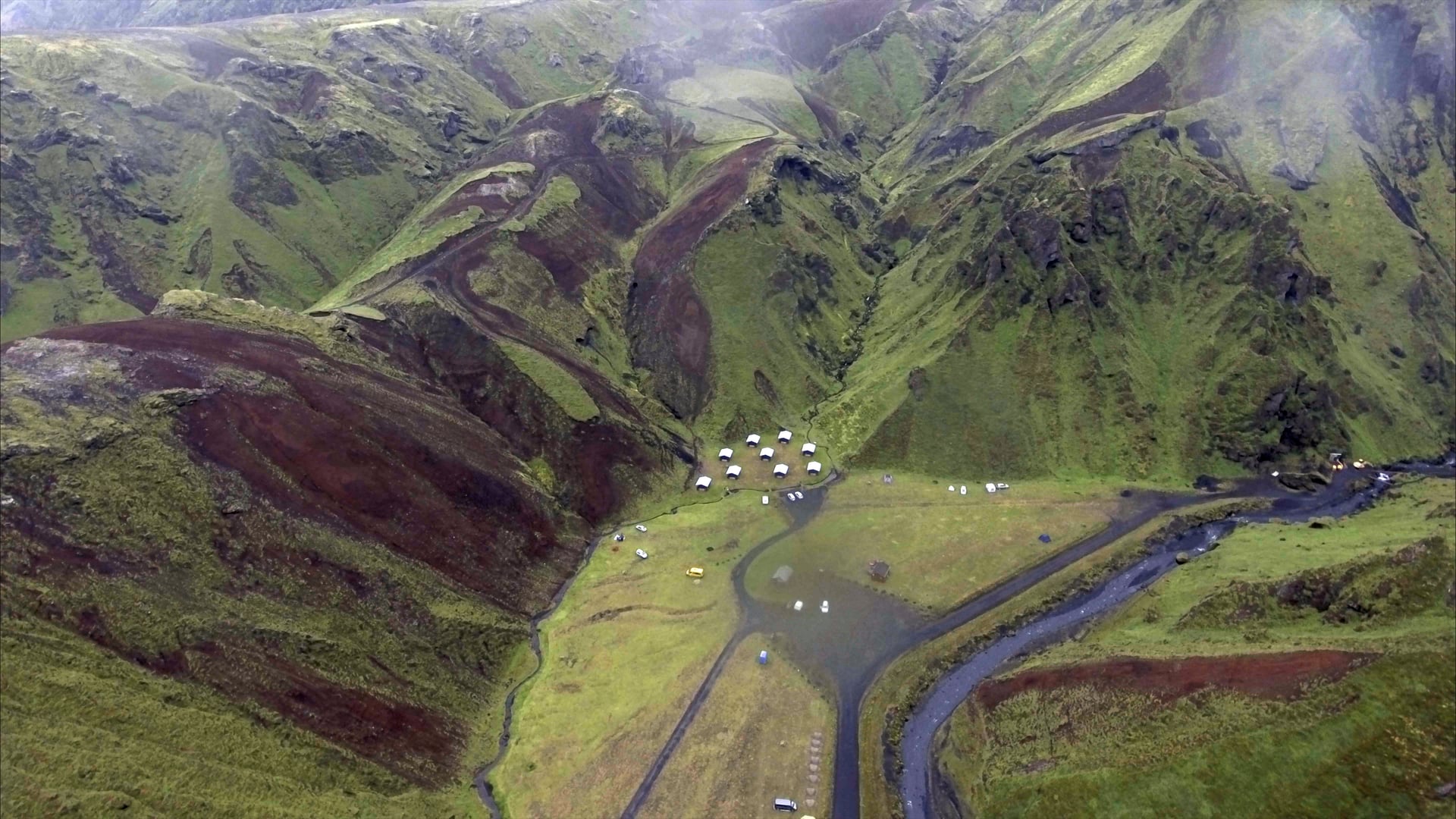
Visit South Iceland describes Þakgil as a secluded oasis for hikers and nature lovers, and that phrase works because the contrast is real. This is one of the most exposed parts of Iceland in the broader geographic sense: black sand plains, glacial rivers, shifting weather, and open Atlantic influence all define the region around Vík. Yet the valley itself feels unexpectedly protected. The cliffs gather around it, the stream softens it, and even the light often seems to settle differently once you are inside. South Iceland's official camping listing goes as far as saying the weather in Þakgil is usually mild and calm because of the surrounding mountains. That is not marketing fluff so much as the actual personality of the place.
The name helps explain the feeling. Visit South Iceland's outdoor guide notes that Þakgil means Roof Canyon, a reference to the steep moss-covered cliffs that seem to arch overhead like a natural roof. It is a good name because it describes both shape and mood. The valley does not feel wide open in the way Iceland often does. It feels gathered, held, almost tucked away from the harsher lines of the outer landscape. For travelers who have spent the day in wind-beaten viewpoints or among crowds on the ring road, that sense of enclosure can feel surprisingly intimate.
The approach matters to the story too. Þakgil's own official site explains that you leave Route 1 by Höfðabrekka, five kilometers east of Vík, and follow the old road that used to be part of Highway 1 until 1955. That one detail gives the place more historical weight than many visitors realize. The road in is not just a modern tourist access track. It belongs to an older geography of movement, before the current ring road made the South Coast more legible and more efficient. Even now, driving inward feels like peeling back one layer of Icelandic travel history.
That old-road memory matters because Þakgil is not only beautiful; it sits in a region that used to be much harder to cross. Mýrdalssandur is not a decorative black-sand plain in the abstract. It belongs to a landscape shaped by glacial outwash, volcanic systems, and routes that could once be punishing or uncertain. Seen from that perspective, Þakgil starts to read not merely as a picturesque canyon but as a place of shelter at the edge of harder ground. It makes sense that people now camp there, hike there, and speak of it with affection. The valley has the logic of refuge built into it.
The official Þakgil site is refreshingly straightforward about what people actually come for. There are walking routes for different abilities, a campsite, showers and bathrooms, cottages, and the valley's famous communal dining cave with a grill and fireplace. Visit South Iceland echoes the same essentials and adds the lovely image that the cave can be lit by candles on cold evenings. That cave is part of why Þakgil stays in memory so strongly. Plenty of Icelandic places are visually impressive. Far fewer have a social heart that feels so perfectly matched to the landscape around them.
A cave dining room sounds like a gimmick until you understand the place. In a broad volcanic country full of open horizons, Þakgil's charm comes partly from enclosure: canyon walls, a tucked-in campsite, a protected stream, an old road, and then finally a shared indoor space made from the mountain itself. It gives evenings there a kind of Highland coziness without domesticating the landscape too much. You are still in the wild edge of South Iceland; you are just meeting it from a pocket of shelter instead of a posture of exposure.
Hiking is the other reason Thakgil benefits from careful explanation. Visit South Iceland calls out the area's marked routes and specifically mentions Remundargil as a popular side canyon with unusual rock formations and birdlife. The official Thakgil site likewise emphasizes that there are many beautiful walking routes fit for different people. That range is important. Thakgil is not only for technical hikers or only for campers who stay overnight. It works just as well for travelers who want one meaningful walk in a landscape that feels less processed than the major roadside stops.
The visual logic of those walks is different from the South Coast's more famous headline attractions. At Seljalandsfoss or Skógafoss, the experience gathers around one immediate spectacle. At Reynisfjara, it is the confrontation between beach, ocean, and basalt. At Þakgil, the pleasure is more cumulative. You notice how green the canyon is compared with the surrounding sands. You notice how the route keeps changing scale. One turn gives you a stream and moss and a close rock wall; another opens toward glacier country and distant southern light. The valley teaches you to move through it rather than simply photograph it from one spot.
That is why Þakgil often feels especially good to travelers who have been doing a lot of driving. It resets the body. The South Coast can produce an odd kind of scenic fatigue because the landmarks are so strong and so photographable that the day risks becoming one stop after another. Þakgil slows the pace down without becoming sleepy. It brings back terrain, footing, ascent, weather, and decision-making in a gentler way than the bigger Highland routes do. You are not just seeing landscape. You are re-entering it.
There is also a strong seasonal truth here. Visit South Iceland notes that Þakgil is reached by a gravel mountain road in summer, and the official campsite information confirms a clearly summer-oriented operating season. This is not a place to write about lazily as though it were always available in the same way. Part of Þakgil's appeal is precisely that it belongs to the accessible season of the South Iceland interior edge, when roads open, hikers spread out, and the valley becomes a temporary camp-world of its own. That seasonal limit gives it more character, not less.
The access story should stay honest. The official site says the road in is passable for all cars, but that statement belongs to local current conditions and should never be romanticized into blanket certainty. What matters for the article is the broader truth: Þakgil feels more remote than Vík suggests, yet less extreme than the deeper Highlands. It occupies a very Icelandic middle ground, where the adventure is real but still approachable for many travelers in the right season. That balance is one reason the place has become beloved without ever feeling fully overrun.
Photographically, Þakgil works best when it is not treated as just another drone-friendly destination. The canyon has depth, softness, and shelter built into it. Streams, slopes, cave light, wet grass, overhanging rock, and small figures walking the paths often tell the story better than one giant panorama alone. Even the official descriptions lean this way, focusing not just on views but on the particular texture of the campsite and the valley. Þakgil is memorable because it combines scenery with inhabitable atmosphere.
From a cultural point of view, that atmosphere matters more than people sometimes admit. Icelandic travel culture is not only about conquering remoteness or photographing spectacle. It is also about knowing how to live in weather, how to value shelter, how to organize simple communal comfort in raw landscapes, and how to move between exposure and warmth. Þakgil, with its dining cave and old-road memory, expresses that side of the country especially well. It feels practical and poetic at the same time.
Thakgil benefits from being explained on its own terms because traveler questions around it is unusually specific. People are not only asking where it is. They want to know why this canyon near Vik inspires such affection, whether it is worth detouring from the South Coast, what the hiking feels like, and whether the cave dining room is really part of the experience. The best way to understand it is yes: Thakgil is worth it because it offers something the main South Coast route often cannot. It offers shelter, texture, and a quieter intimacy inside one of Iceland's most dramatic regions.
What stays with many travelers after Þakgil is not any single viewpoint, though there are plenty. It is the total impression of a place that feels hidden without feeling invented: an old road, a canyon roof, a stream through camp, the dark memory of the sandur outside, and the sense that for a little while South Iceland stopped performing and simply let you live inside it.