Iceland Travel Guides
Ytri Tunga: Seals, Pale Shore, and the Art of Watching Quietly
A fuller private guide to Ytri Tunga, with seal-watching ethics, harbour and grey seal context, the lighter coastal mood of southern Snæfellsnes, and why patience matters more here than spectacle.
GlaciGo Iceland / May 2026 / 10 min read
Ytri Tunga is one of the places on Snæfellsnes where people arrive expecting one thing and end up remembering another. Most come for seals. That is reasonable; the beach is one of the best-known seal-watching spots in Iceland and deserves that reputation. But if you slow down a little, Ytri Tunga becomes more than wildlife viewing. It feels like a change in the whole coastal language of the peninsula. After so many dark lava edges, dramatic cliffs, and black pebble beaches, this lighter shore with its broad rocks, softer colors, and patient animal life creates a completely different rhythm.
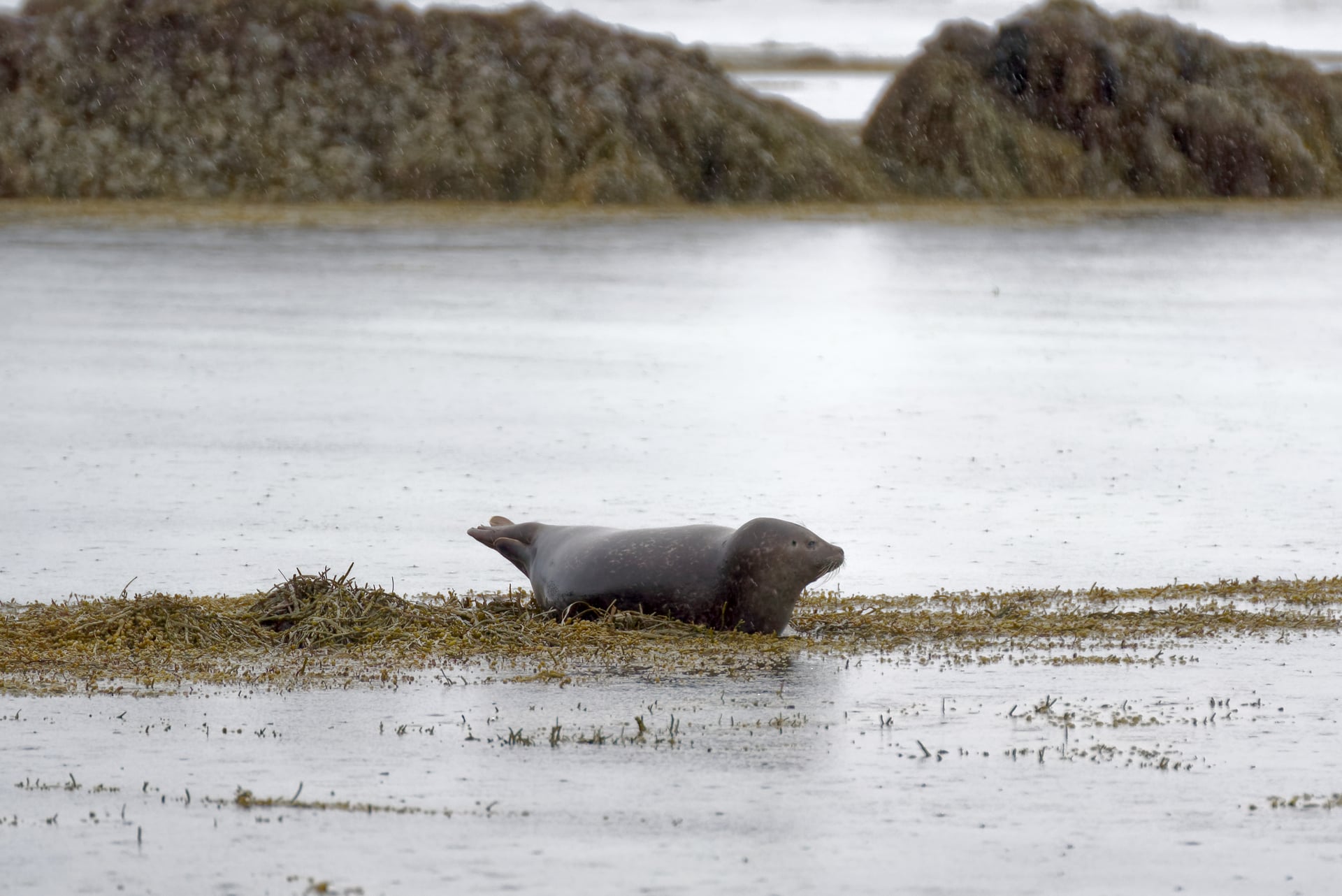
West Iceland's official walking-trail page is clear about Ytri Tunga's main attraction: it is first and foremost one of the best seal-watching spots in Iceland. The same source explains why seals gather here: the rocky shore offers a useful combination of mainland access and the close proximity of the open sea, giving them a place to haul out while staying near safety. That simple explanation is valuable because it keeps Ytri Tunga from becoming mystical for no reason. The appeal begins with habitat. The animals are here because the coast suits them.
And yet the experience of the place is not merely biological. What many visitors notice first is the color. Ytri Tunga sits on the south side of Snæfellsnes, but it does not perform south-coast drama the same way Búðir or Arnarstapi do. The shore is lighter, the stones broader and more open, and the sea edge feels less like a wall and more like a threshold. That shift matters. Iceland teaches many travelers to expect blackness at the waterline. Ytri Tunga quietly interrupts that expectation, and the interruption makes the peninsula feel larger and more varied.
This is one reason Ytri Tunga works so well as part of a longer itinerary. It changes the eye. After lava, stacks, black beaches, and rough cliffs, the seal beach introduces a softer kind of attention. You start scanning the rocks instead of the skyline. You watch for movement rather than chasing one monumental form. The place asks for patience more than awe. In that sense, Ytri Tunga is not only a destination but a change of pace, and that is part of its value.
West Iceland's seal-watching page helps widen the picture. It notes that two seal species live and breed in Icelandic waters and along its shores: the harbour seal, Phoca vitulina, and the grey seal, Halichoerus grypus. The same official material presents Ytri Tunga as an accessible colony that can be watched year-round. That year-round quality matters because it gives the beach a different role from many seasonal bird cliffs or short-window landscape moments. Ytri Tunga is a place where life keeps returning to the same visible margin, and visitors can sense that continuity.
But Ytri Tunga only works if people behave well around it. This is where the official West Iceland guidance is unusually important and deserves to shape the article rather than sit as an afterthought. Visitors are asked to keep at least 50 metres from the nearest seal, and 100 metres if pups are present. If a seal makes a sound, moves, or seems alert, that may be a sign of disturbance, and people should move farther away. Visitors are warned never to place themselves between a seal and the ocean, never to touch pups that seem abandoned, to move quietly, to avoid throwing objects, to avoid camera flash, and to keep dogs leashed.
That guidance does more than protect wildlife. It changes the emotional quality of the visit in a good way. Ytri Tunga is not a zoo, and the seals are not performers. The best version of the experience is one in which you become a little smaller and calmer yourself. Stand still, lower your voice, wait. The beach rewards respectful observation more than excitement. In a world where wildlife destinations are often consumed too aggressively, Ytri Tunga offers a more disciplined kind of pleasure.
The walking-trail information also helps because it frames the site as a modest physical experience rather than only a roadside glance. West Iceland describes the route from the car park to the shore as an easy to moderate marked trail of about 1.67 kilometres, open year-round, with mixed materials, small rocks, grass, and some steps. That sounds practical, and it is, but it also matters narratively. Ytri Tunga is not only a pull-off where animals happen to appear. There is a small act of approach built into the place. You move toward it, and that movement helps slow the visit down to the pace the wildlife requires.
This slower pace is part of what makes Ytri Tunga feel distinct from more dramatic Snæfellsnes landmarks. The place does not dominate you visually. Instead, it trains your perception. You begin by seeing rocks and water, and then gradually distinguish shape from stone, seal from ledge, mother from pup, stillness from alertness. There is a quiet pleasure in that shift from broad scenery to careful looking. Ytri Tunga turns tourists into observers, at least for a while.
It is also worth noticing how accessible beauty and ecological seriousness coexist here. West Iceland describes the area as beautiful and accessible, and that combination is exactly right. Ytri Tunga is not remote in the theatrical Iceland sense, but it is still a real habitat with real stakes for the animals using it. That tension is what gives the beach its character. It is easy to reach, but it should not be treated casually. The success of the place depends on people understanding that accessibility is not permission to intrude.
For photography, Ytri Tunga poses an interesting challenge. The obvious picture is the seal on the rock, and of course that matters. But the stronger images often show more context: pale shore, low tide rocks, sea space, and the animal's own sense of distance. The landscape is part of the story. Without it, the beach becomes generic wildlife content. With it, Ytri Tunga becomes what it really is: a place where the shape of the coast and the behavior of the animals belong to one another.
Ytri Tunga is unusually practical and experiential at the same time. Travelers want to know whether seals can really be seen there, when to go, how close they should get, what species they might encounter, and whether the stop is worth adding among so many Snaefellsnes beaches. The fuller answer is yes, precisely because it is not just another beach. It offers a slower, lighter, more observant way of being on the coast.
What stays with many travelers after Ytri Tunga is not only the seals themselves, but the atmosphere of watchfulness the place creates. The shore feels open, but not empty. The animals are visible, but not available. The experience is gentle, but not passive. You come away with the sense that this piece of coast is shared rather than owned. That is a healthy feeling, and a memorable one. Ytri Tunga may look quieter than some of Snæfellsnes' grander stops, but its quiet is exactly where its value lies.